
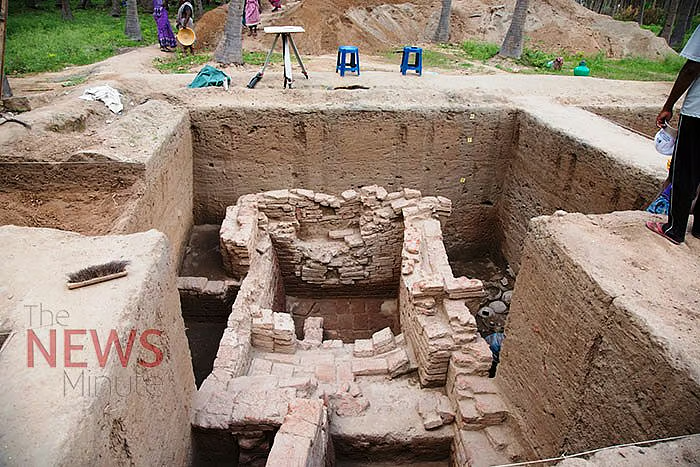
The Keezhadi excavations, located near Sivaganga in Tamil Nadu, continue to reshape our understanding of early Tamil society. Now entering its 9th and 10th phases (2024–25), this large-scale archaeological project has revealed an advanced urban settlement thriving along the Vaigai River more than 2,500 years ago.
Keezhadi is no longer just an excavation site — it has become a cultural landmark proving that urban, literate, and industrial societies flourished in southern India long before the Common Era.
What’s New in 2024–25?
The latest excavation seasons have expanded our knowledge of settlement planning, craft production, script development, and daily life during the Sangam age.
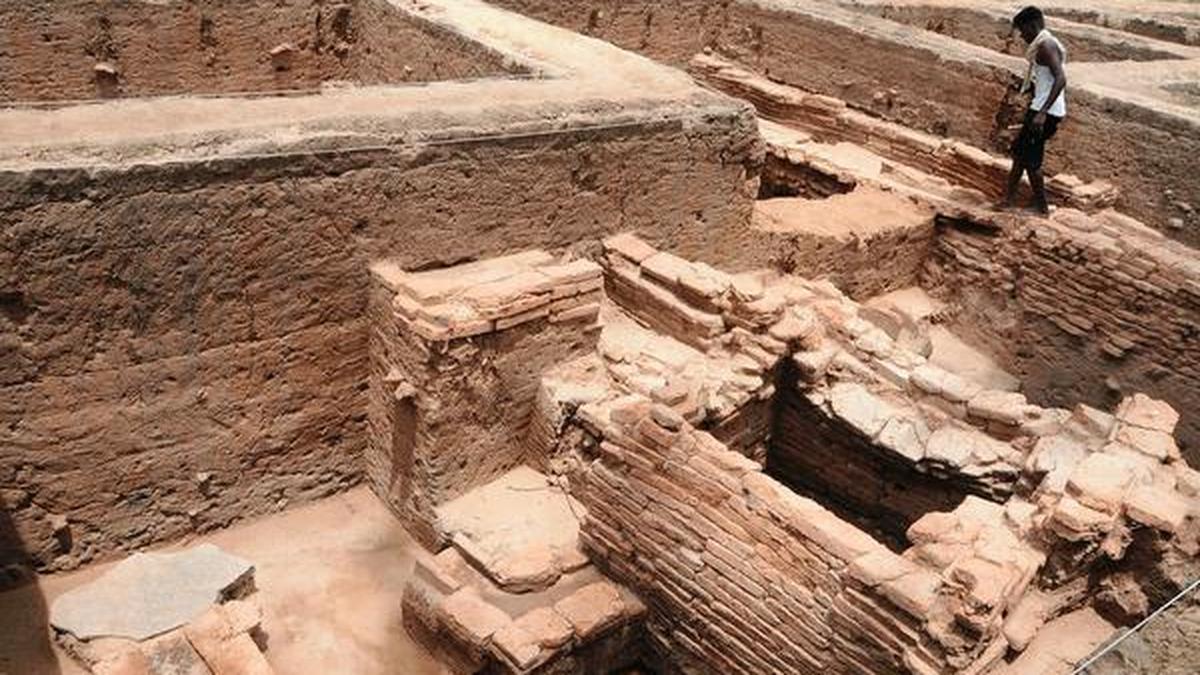
- New Brick Structures Indicating Urban Planning
Archaeologists uncovered:
- Well-laid brick platforms
- Drains and walls
- Residential habitation layers
These reveal a planned townscape, suggesting organized streets, drainage, and standardized architecture comparable to early historic towns of India.
2. Industrial Installations Show Specialized Crafts
Recent trenches revealed:
- Furnaces
- Kilns
- Ceramic production zones
- Iron slag and metal-working debris
This indicates a highly skilled industrial economy where goods were manufactured at scale, likely for regional trade.
3. Tamil-Brahmi Graffiti Marks – Continuity of Script
One of Keezhadi’s most important findings is the recurring presence of Tamil-Brahmi graffiti on pottery.
Latest discoveries include:
- Symbols identical to those in earlier phases
- Marks suggesting ownership, trade, or counting
- Possible early writing practices (300 BCE–100 CE)
These inscriptions strengthen the argument that literate culture existed in the Tamil region centuries before the Mauryan period.
4. Evidence of Domestic Life & Social Structure
The 2024–25 season uncovered artefacts reflecting everyday life:
- Terracotta figurines
- Spindle whorls (textile industry)
- Beads
- Black-and-Red Ware & rouletted ware
- Animal bones and carbon samples
These findings show a well-organized household culture, textile production zones, and dietary patterns typical of an urbanizing society.
5. Organic Residue Studies – What They Ate
Carbon samples and botanical remains collected this season suggest:
- Millet-based diet
- Rice cultivation
- Use of legumes
- Evidence of heating and cooking installations
This paints a picture of a nutritionally diverse agricultural society.
6. Connections with Other Vaigai River Sites
Ongoing excavations at Agaram, Konthagai, and Manalur (part of the Vaigai Valley Civilization Project) show continuity in:
- Burial practices
- Pottery styles
- Craft production methods
This confirms Keezhadi as the central urban hub of a larger civilisation corridor along the river.
🔍 What Keezhadi Tells Us About Early Tamil Society
• An Urban Culture Before the Sangam Period
The discovery of complex settlement structures suggests that urban life in Tamil Nadu predates textual references.
• Literacy and Script Were Already Established
Tamil-Brahmi graffiti and pot sherds indicate writing was part of daily life by at least 300 BCE.
• Industrial Craftsmanship Was Advanced
Metal work, pottery production, and textile tools reveal specialized industries.
• Social Stratification & Community Living
Large habitations with planned features suggest organized communities with defined roles.
🧭 Why Keezhadi Matters Today
Keezhadi challenges long-standing assumptions that ancient urbanism in India was limited to North India or the Indus Valley. Instead, it reflects:
- A parallel cultural evolution in South India
- A society rich in economy, literacy, and technology
- Deep roots of Tamil identity and civilization
The site continues to attract global attention because it redefines the historical timeline of South Indian civilization.