
A recent archaeological discovery in western India has sparked fresh debate among historians and archaeologists. At Sadhrewala, a village near Jaisalmer in Rajasthan, researchers have uncovered pottery, tools, and brick remains that may indicate a previously unknown settlement of the Indus Valley Civilization.
If confirmed, this find could dramatically expand our understanding of Harappan settlement patterns and their ability to adapt to harsh desert environments like the Thar Desert.
Location: Sadhrewala Near Jaisalmer
Sadhrewala lies on the margins of the Thar Desert, a region traditionally considered unsuitable for large, permanent Bronze Age settlements. Unlike river-fed plains of the Indus and Ghaggar-Hakra systems, this area is marked by aridity, shifting sand dunes, and limited surface water.
The discovery of structural remains here challenges long-standing assumptions that Harappan populations were confined mainly to fertile river valleys.
Artefacts Unearthed at the Site
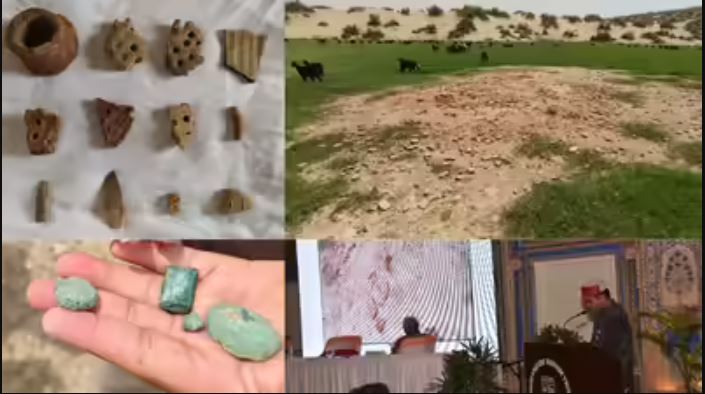
Preliminary surveys and surface exploration have revealed:
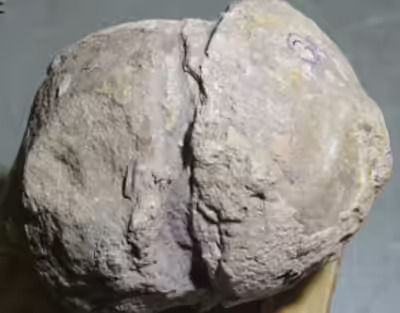
- Pottery fragments showing similarities to Harappan ceramic traditions
- Stone and utility tools, possibly linked to daily life and craft activities
- Brick remains, suggesting planned construction rather than temporary camps
The presence of bricks is particularly significant, as baked and standardized bricks are a defining feature of Indus Valley urban planning.
Why This Discovery Is Archaeologically Important
1. Expansion of Harappan Geography
Most known Harappan sites are located in present-day Pakistan, Gujarat, Haryana, and Punjab. A confirmed settlement near Jaisalmer would push the western desert frontier of the civilisation further than previously mapped.
2. Desert Adaptation Strategies
The find raises critical questions:
- Did Harappans exploit palaeochannels or seasonal rivers now lost beneath desert sands?
- Were advanced water storage and rain-harvesting techniques used?
- Did the climate during the Mature Harappan phase differ significantly from today?
3. Trade and Connectivity
Sadhrewala’s location suggests a possible link between:
- Sindh and Lower Indus regions
- Gujarat’s Harappan coastal sites
- Interior Rajasthan trade networks
This supports the idea that Harappans maintained wide-ranging economic and cultural connections.
Scientific Verification Still Needed
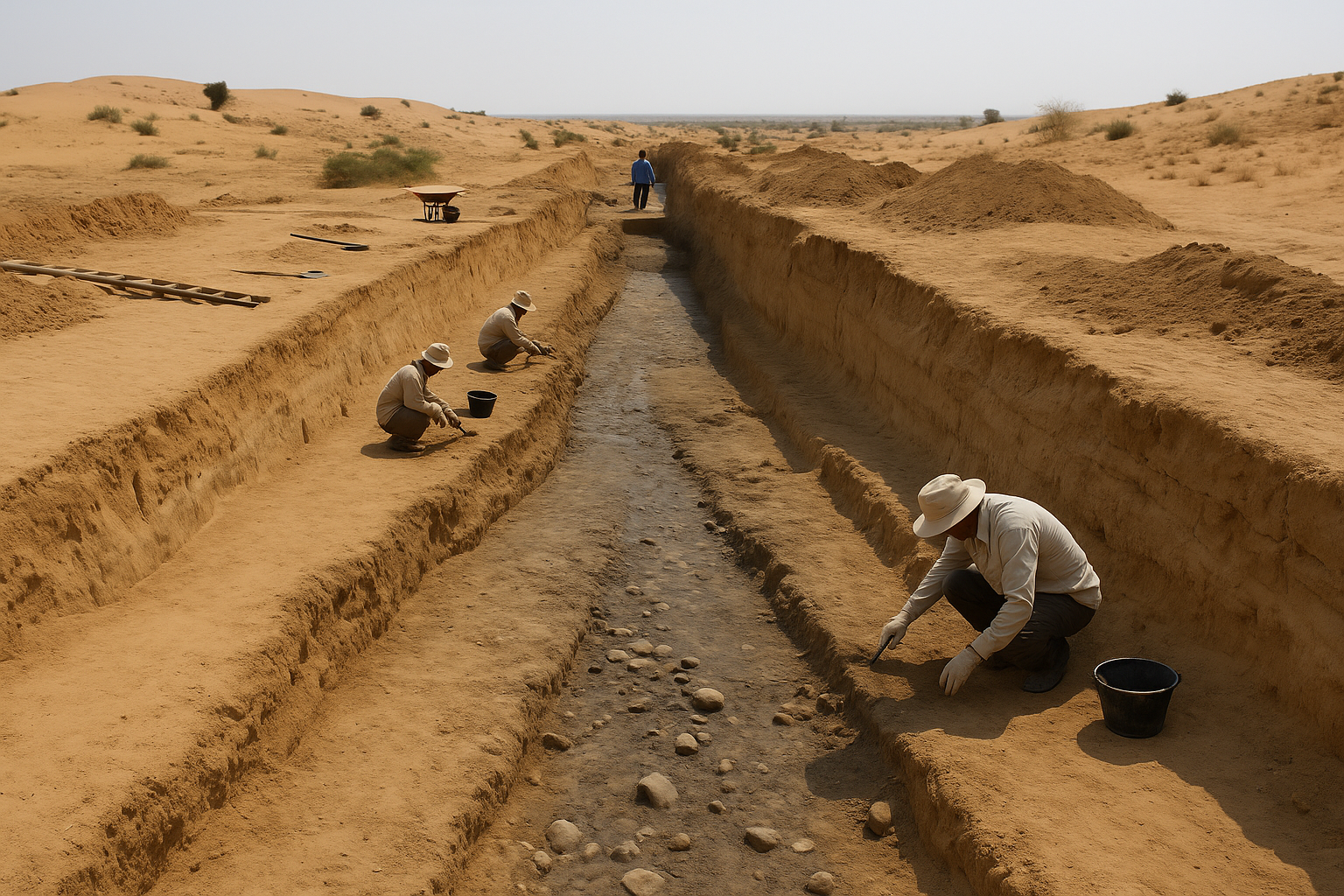
Archaeologists have stressed that the site is currently under investigation and not yet conclusively identified as Harappan. Confirmation will require:
- Stratigraphic excavation
- Scientific dating methods such as radiocarbon or thermoluminescence analysis
- Comparative study with established Indus Valley sites
Until these steps are completed, Sadhrewala remains a potential Indus Valley site rather than a confirmed one.
Rethinking the Indus Valley Civilisation
Over the last few decades, archaeology has moved away from viewing the Indus Valley Civilisation as a rigid, river-bound culture. Discoveries in arid and semi-arid zones show a civilisation that was flexible, adaptive, and environmentally intelligent.
If validated, the Sadhrewala site will further strengthen the argument that Harappan communities were capable of thriving across diverse landscapes—from floodplains and coasts to deserts.
Conclusion
he potential discovery of an Indus Valley Civilisation settlement near Jaisalmer marks an exciting moment for Indian archaeology. Beneath the sands of the Thar Desert may lie evidence of how one of the world’s earliest urban cultures adapted to extreme environments.
As further excavations continue, Sadhrewala could emerge as a key site in rewriting the geographical and ecological history of the Harappan world.