
Accidental Discovery Triggers Archaeological Attention
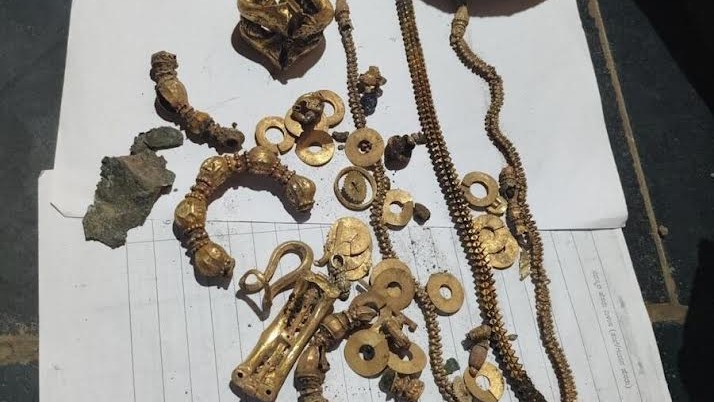
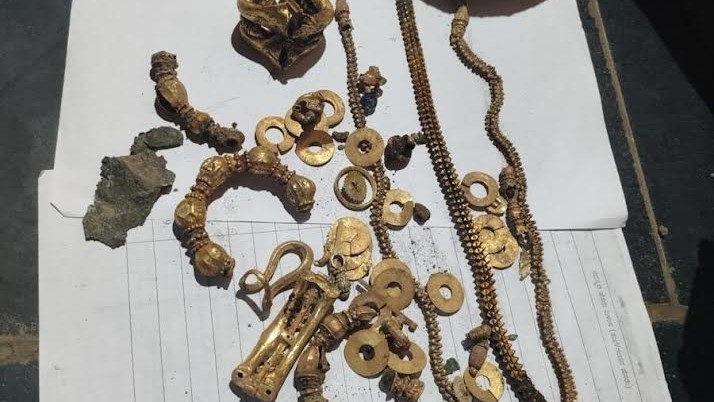
A chance discovery in Gadag district, Karnataka, has led to fresh archaeological activity near the historic temple town of Lakkundi. According to preliminary local reports, villagers unearthed gold ornaments dating approximately 300–400 years old during routine activity near a temple site, prompting authorities to initiate a formal excavation.
While official confirmation of the exact site boundaries is still awaited, the association with Lakkundi has already generated significant interest due to the region’s deep archaeological and architectural legacy.
Details of the Gold Ornament Discovery
The recovered artifacts reportedly include gold ornaments that may belong to the late medieval to early modern period. At this early stage, archaeologists are focusing on documenting the find context rather than drawing definitive conclusions.
Such ornaments in temple-adjacent areas are often linked to:
- Ritual or votive offerings
- Temple treasuries or wealth concealment
- Periods of socio-political instability
Scientific analysis and stratigraphic evidence will be required to accurately determine the cultural and chronological placement of the objects.
Why Lakkundi Matters Archaeologically
The possible link to Lakkundi significantly elevates the importance of this discovery. Lakkundi is one of Karnataka’s most prominent heritage towns, celebrated for its Western Chalukya–period temples, intricately designed kalyanis (stepwells), and advanced stone craftsmanship.
Historically, Lakkundi functioned as:
- A major religious and cultural centre
- A hub of temple patronage and craftsmanship
- A settlement with continuous habitation across centuries
If the gold ornaments are confirmed to originate from this region, they may provide valuable insight into temple economies, artistic traditions, and ritual practices during the later historical phases of the area.
Archaeological Process and Official Oversight
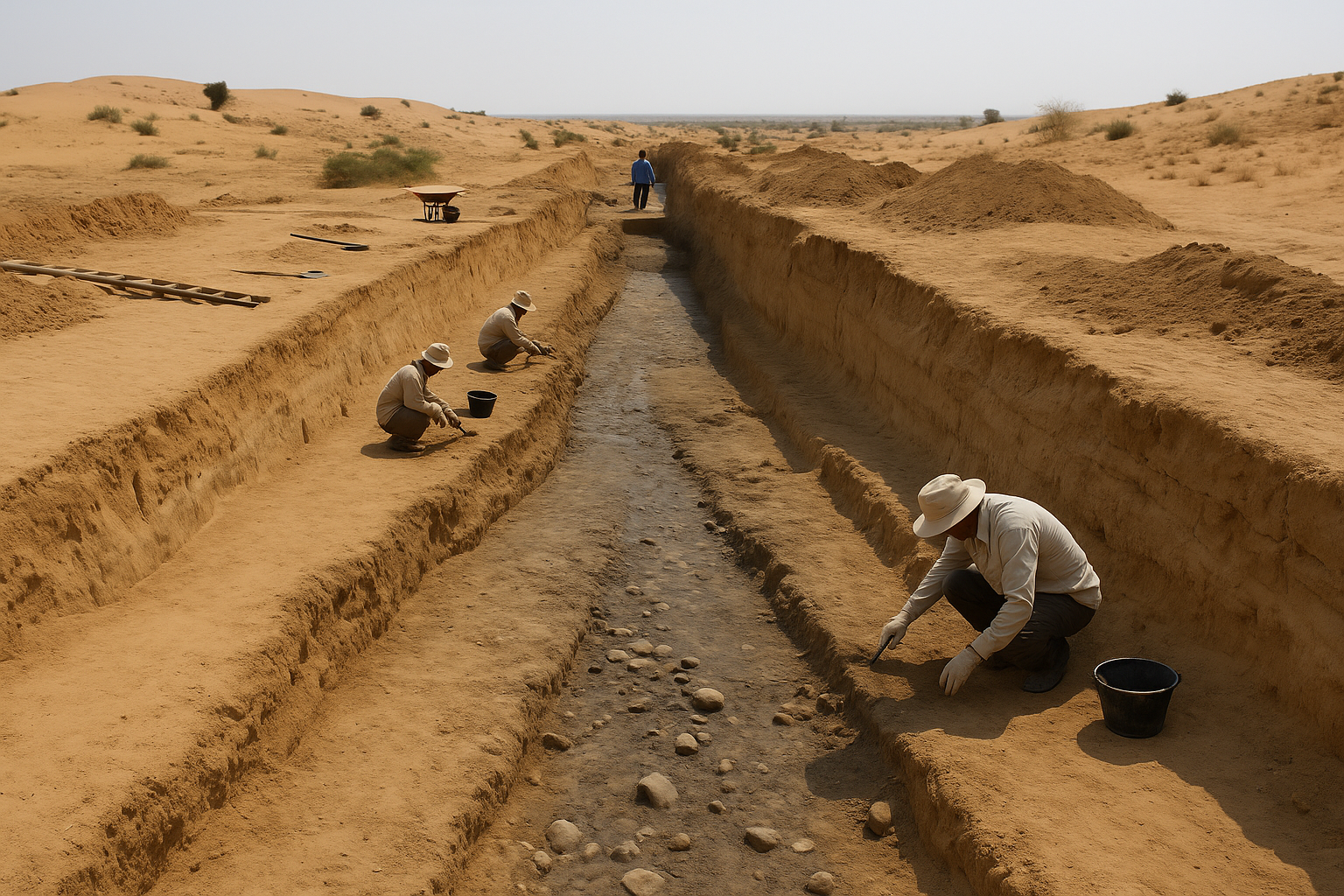
The excavation is being conducted following standard archaeological protocols commonly applied by the Archaeological Survey of India. At present, the focus remains on:
- Securing the site to prevent disturbance
- Layer-by-layer excavation and recording
- Careful conservation of recovered materials
Authorities have emphasized the importance of controlled excavation to ensure that contextual information—often more valuable than the artifact itself—is not lost.
Community Role and Chance Discoveries
This incident once again highlights the crucial role played by local communities in uncovering India’s archaeological heritage. Many significant sites across the country were first identified through accidental discoveries during everyday activities.
Responsible reporting by villagers in the Lakkundi–Gadag region ensured:
- Immediate protection of the site
- Proper archaeological intervention
- Prevention of illicit artifact trade
Such collaboration between communities and heritage authorities is essential for sustainable heritage preservation.
What to Expect Going Forward
As the excavation progresses:
- The precise location and cultural attribution will be officially clarified
- Additional finds such as coins, structural remains, or inscriptions may emerge
- Scientific studies will help confirm dating and material composition
If further evidence supports the Lakkundi connection, this discovery could become a key reference point for understanding post-Chalukyan temple history in northern Karnataka.
Conclusion
The gold ornament discovery near Lakkundi in Gadag district serves as a powerful reminder that India’s past often survives quietly beneath living landscapes. As archaeologists continue their work, this early-stage excavation has the potential to enrich our understanding of Karnataka’s historical continuity and temple traditions.