
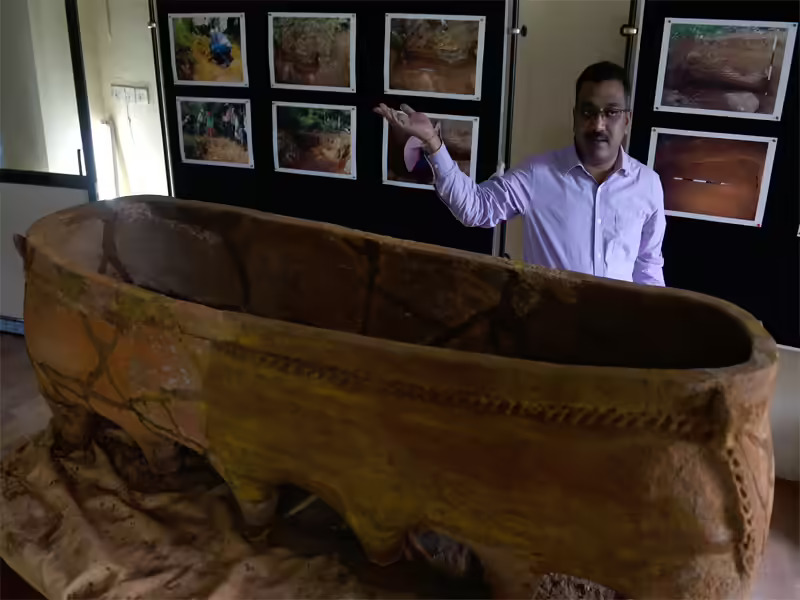
A rare and remarkable archaeological discovery has emerged from Pallavaram, near Chennai, where excavations have revealed a 2,300-year-old terracotta sarcophagus supported on twelve legs.
This unusual burial structure is challenging conventional typologies of early South Indian funerary practices and opening new debates about ritual diversity, craftsmanship, and social identity in the Early Historic period.
📍 Where Was It Found?
Pallavaram is historically significant in Indian archaeology. The region gained prominence in the 19th century when prehistoric stone tools were discovered there, marking one of the earliest recorded Paleolithic findings in India.
The recent excavation adds yet another chapter to Pallavaram’s archaeological legacy — this time from the Early Historic period (circa 300 BCE).
🏺 What Makes This Sarcophagus Unique?
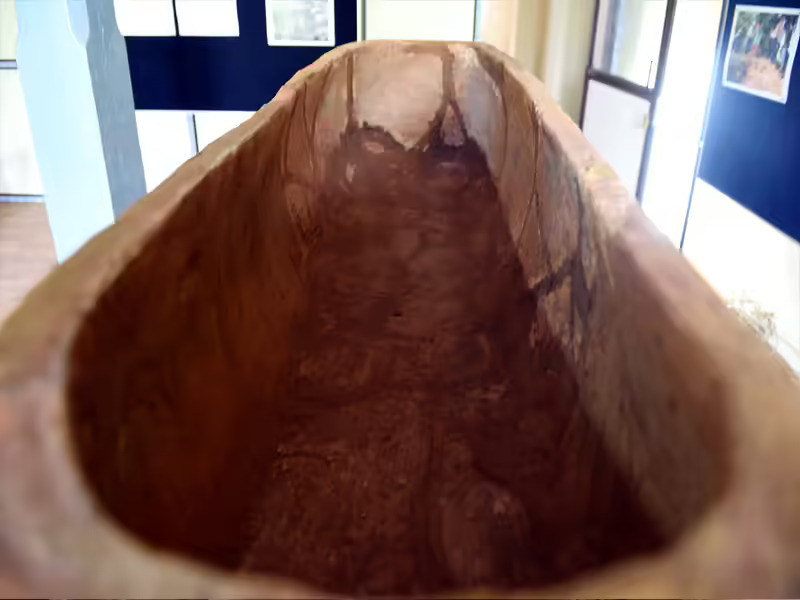
Unlike standard burial urns or pit burials typically found across Tamil Nadu, this terracotta sarcophagus:
- Stands elevated on twelve carefully crafted legs
- Appears structurally planned rather than purely functional
- Suggests symbolic or ritual intent
- Represents a rare variation in burial architecture
Multi-legged terracotta sarcophagi are known in South Indian megalithic contexts, but a twelve-legged example is extremely rare, making this find archaeologically significant.
🏛️ Early Historic Tamil Nadu: A Period of Transition
Around 300 BCE, Tamil Nadu was transitioning from the Late Iron Age into the Early Historic phase — a dynamic period marked by:
- Growth of trade networks (including early Indo-Mediterranean exchanges)
- Emergence of proto-urban settlements
- Increasing social stratification
- Complex funerary traditions
Burial practices in the region included:
- Urn burials
- Cist burials
- Cairn circles
- Pit burials
- Sarcophagus burials
The Pallavaram discovery expands this spectrum and demonstrates that funerary traditions were far more diverse than previously categorized.
⚱️ Symbolism of the Twelve Legs: Functional or Ritual?
The elevated design raises intriguing archaeological questions:
1️⃣ Structural Purpose
The legs may have provided stability and protection from soil moisture.
2️⃣ Symbolic Elevation
Elevation could represent separation of the deceased from earthly contamination — possibly reflecting ritual purity or afterlife beliefs.
3️⃣ Status Marker
Such elaborate craftsmanship may indicate the burial of an individual of social importance.
4️⃣ Cosmological Significance
The number twelve itself may hold symbolic meaning — potentially linked to lunar cycles, calendrical systems, or ritual numerology, though further evidence is required.
🧪 Material & Craftsmanship
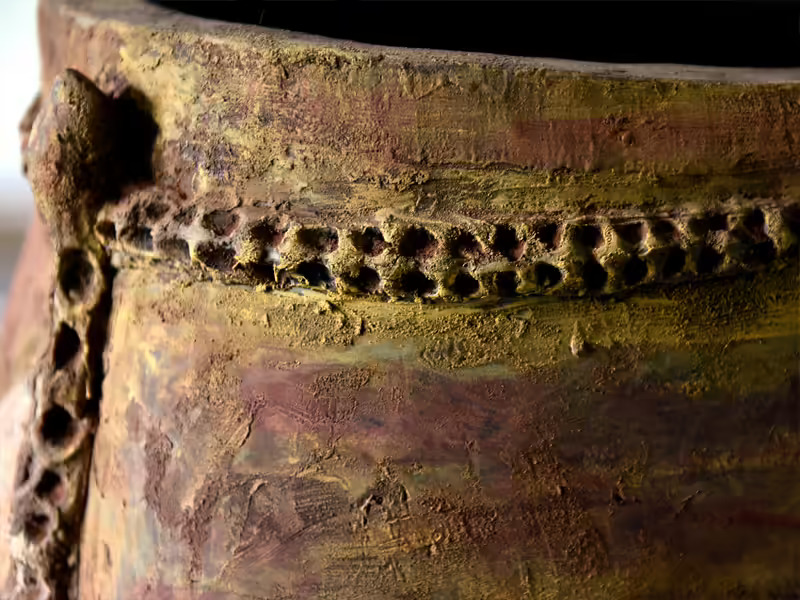
The sarcophagus is made of terracotta, indicating:
- Advanced ceramic technology
- Skilled artisanship
- Controlled firing techniques
- Organized production
Its architectural planning suggests intentional design rather than improvisation.
🧠 Why This Discovery Matters
This discovery is important for multiple reasons:
- It challenges standardized burial typologies in South Indian archaeology
- It highlights regional experimentation in funerary architecture
- It reinforces Pallavaram’s long archaeological continuity
- It invites interdisciplinary research into mortuary symbolism
Urban expansion in and around Chennai continues to reveal buried histories — emphasizing the urgent need for systematic documentation and preservation.
📊 Archaeological Significance at a Glance
| Feature | Detail |
|---|
| Location | Pallavaram, Tamil Nadu |
| Period | Early Historic (~300 BCE) |
| Material | Terracotta |
| Structure | Sarcophagus with 12 legs |
| Cultural Context | Megalithic–Early Historic funerary traditions |
| Importance | Rare burial type challenging typological norms |
🔎 Broader Context: Mortuary Diversity in South India
Tamil Nadu’s archaeological record demonstrates extraordinary burial diversity. The twelve-legged sarcophagus reinforces that funerary practices were:
- Community-specific
- Symbolically rich
- Technologically sophisticated
- Socially expressive
Each burial form tells us not just how people were buried — but how they understood death, identity, and the cosmos.
📌 Conclusion
The 2,300-year-old terracotta sarcophagus from Pallavaram is more than an artifact — it is a material narrative of ritual complexity in Early Historic South India.
As excavations continue, this discovery may reshape our understanding of mortuary architecture and cultural expression in ancient Tamil society
🔔 Stay Updated
For more verified archaeological discoveries from across India, follow The Indian Archaeology for research-backed insights, excavation updates, and heritage awareness.