
A team of archaeology students from the University of Madras has identified a potential Stone Age tool-making workshop near Vellore, located in the southern Indian state of Tamil Nadu.
The survey revealed a dense scatter of prehistoric stone tools including handaxes, multi-platform cores, retouched flakes, and quartz microliths. The assemblage suggests a technological phase that may fall between the Lower and Middle Palaeolithic periods, although absolute dating is still pending.
These discoveries contribute valuable new evidence to the still developing record of prehistoric human activity in South India.
Discovery of a Stone Tool Workshop
During field survey work, researchers documented a dense concentration of lithic artifacts scattered across a hillside landscape.
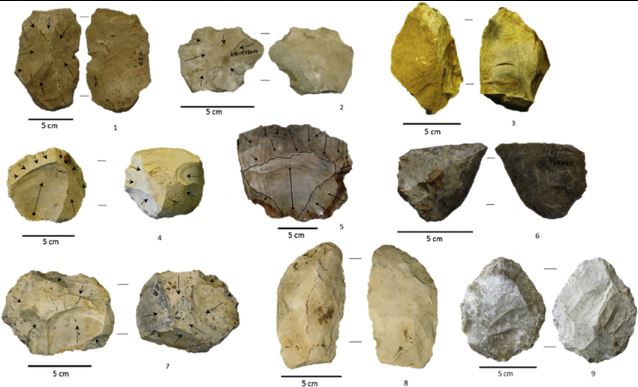
The assemblage includes:
- Handaxes, typical of Acheulean and later lithic traditions
- Multi-platform cores, indicating repeated flake removal
- Retouched flakes, suggesting secondary modification for tool use
- Quartz microliths, which may represent later technological developments
The presence of large quantities of debitage (stone flakes produced during tool making) strongly indicates that this location functioned as a lithic production zone or workshop.
Transitional Phase in Stone Tool Technology
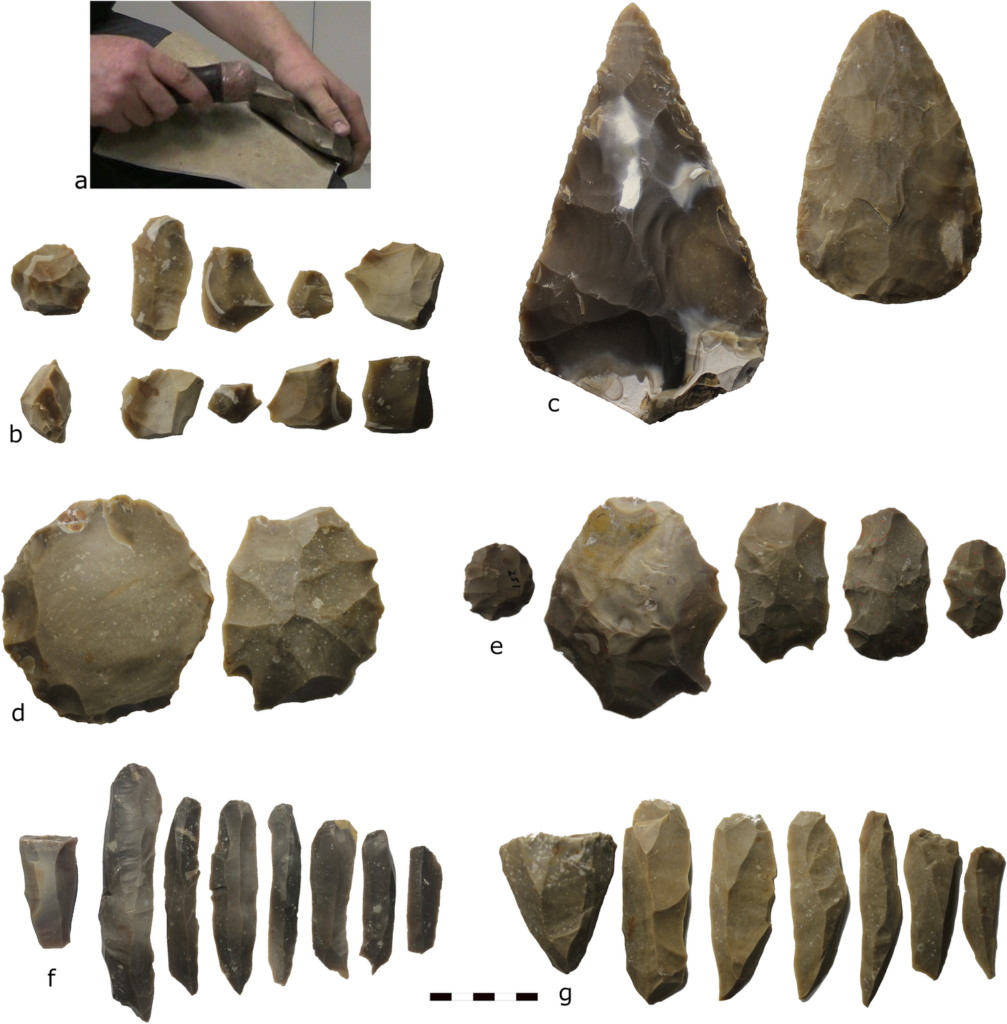
Preliminary analysis suggests that the site may represent a transitional phase between Lower and Middle Palaeolithic technologies.
The Lower Palaeolithic, known for Acheulean handaxes and large cutting tools, is followed by the Middle Palaeolithic, which is characterized by more refined flake-based technologies.
If confirmed through further study and dating, the Vellore site could help fill important gaps in the Middle Palaeolithic archaeological record of South India, which remains comparatively sparse.
Significance for South Indian Prehistory
The identification of a dedicated tool-making area suggests that prehistoric communities may have organized specific locations for stone tool production.
Such sites can provide insight into:
- Prehistoric technological skills and knowledge
- Patterns of raw material procurement
- Land use strategies of early human groups
- Mobility and settlement behavior in prehistoric landscapes
In simpler terms, the hillside near Vellore may once have functioned as a prehistoric “stone tool factory” used tens of thousands of years ago.
Further research, including detailed typological analysis and absolute dating, will be necessary to establish the exact age and cultural context of the site.
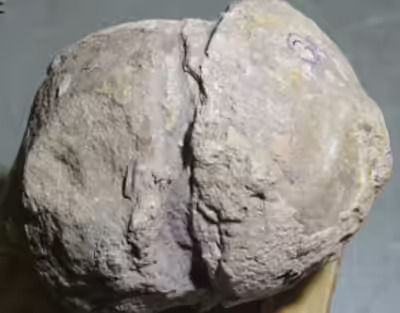
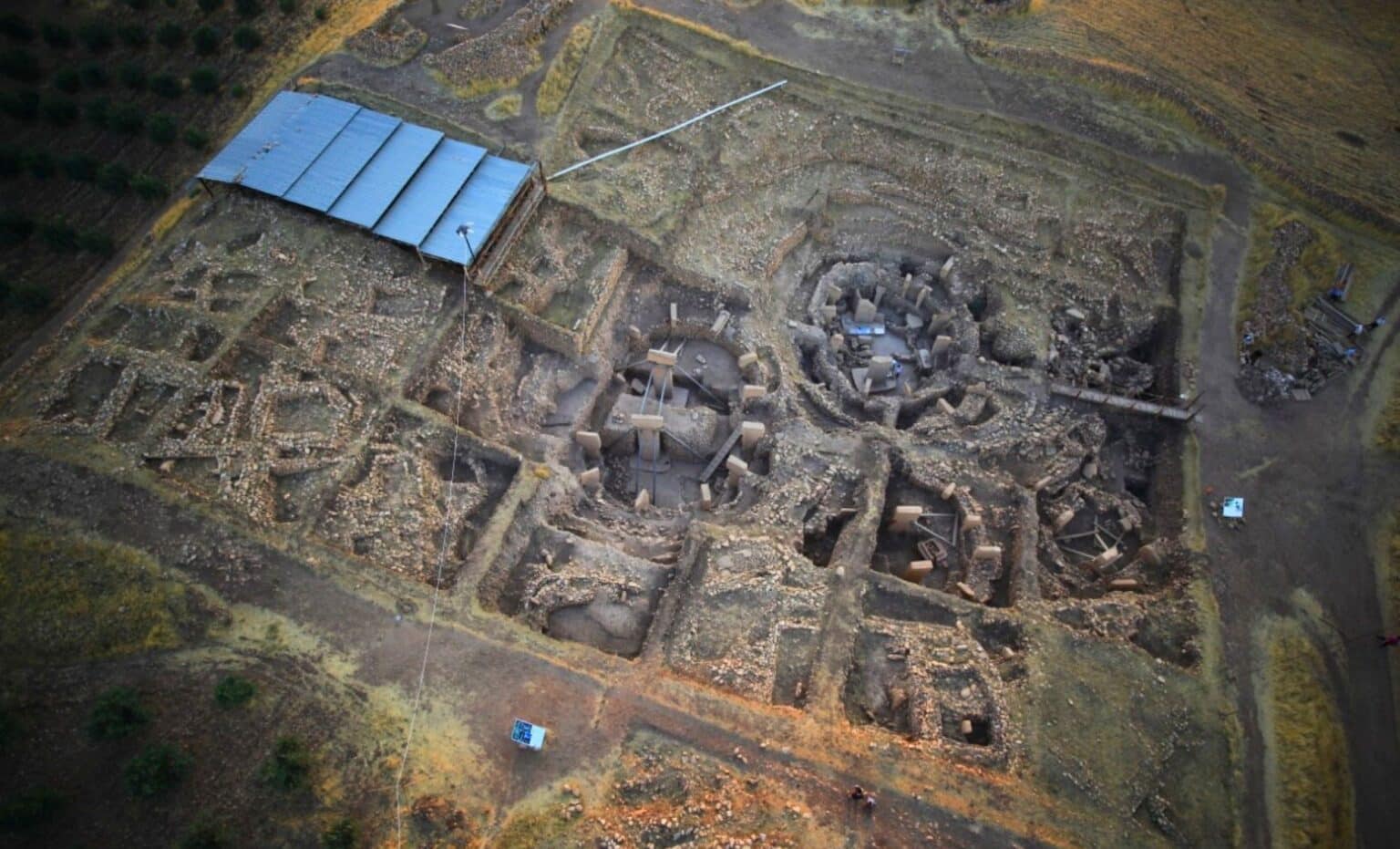
⚠️ Note: The images used here are representative archaeological images related to Paleolithic stone tools and lithic production sites.