
Researchers have documented a group of 12th–13th century architectural fragments near the Vena River close to Hinganghat, in the Indian state of Maharashtra.
The carved basalt stones include pillar components, architectural fragments, and decorative motifs such as lotus carvings, which suggest the remains of a once substantial temple or sabhamandap (assembly hall) structure.
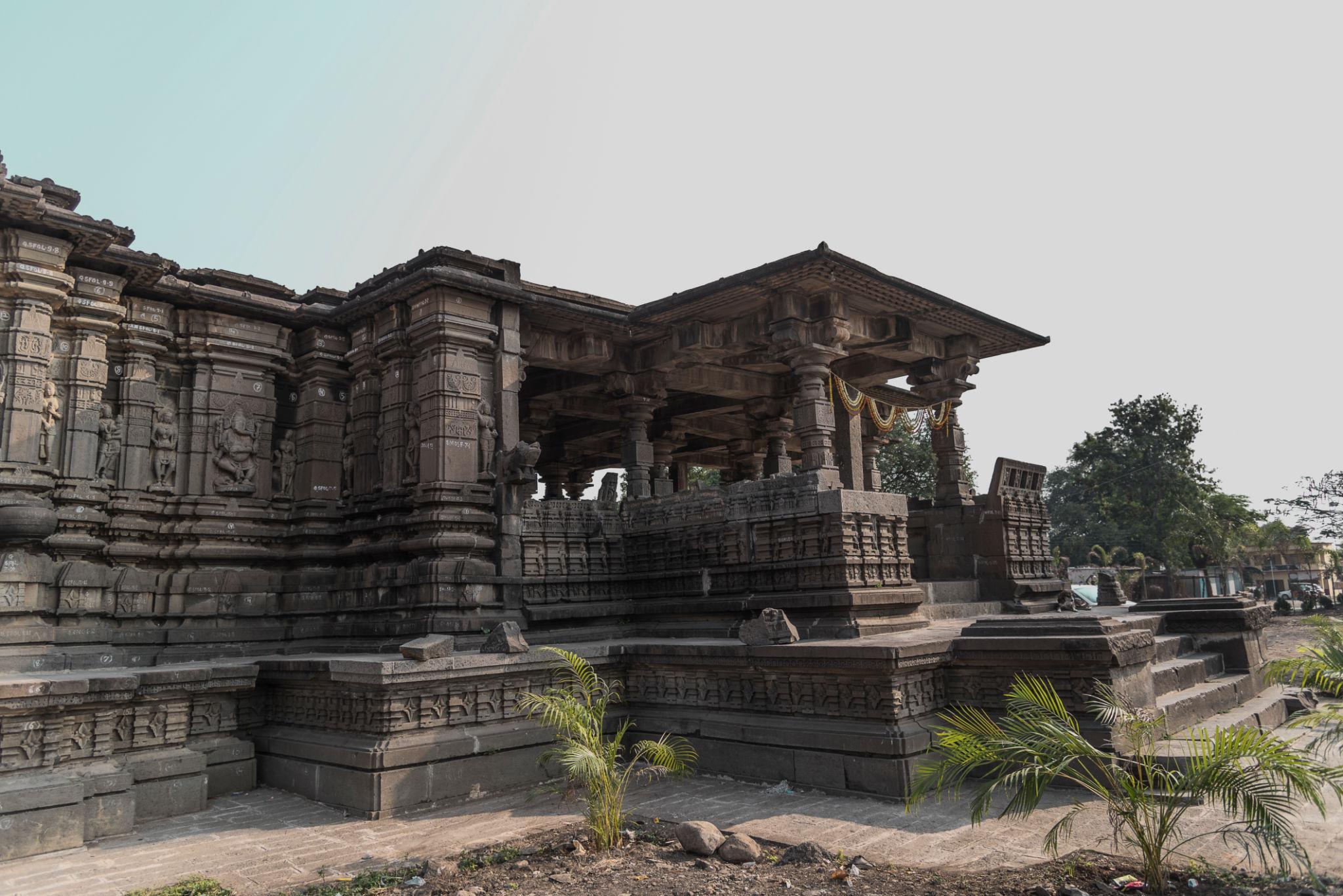
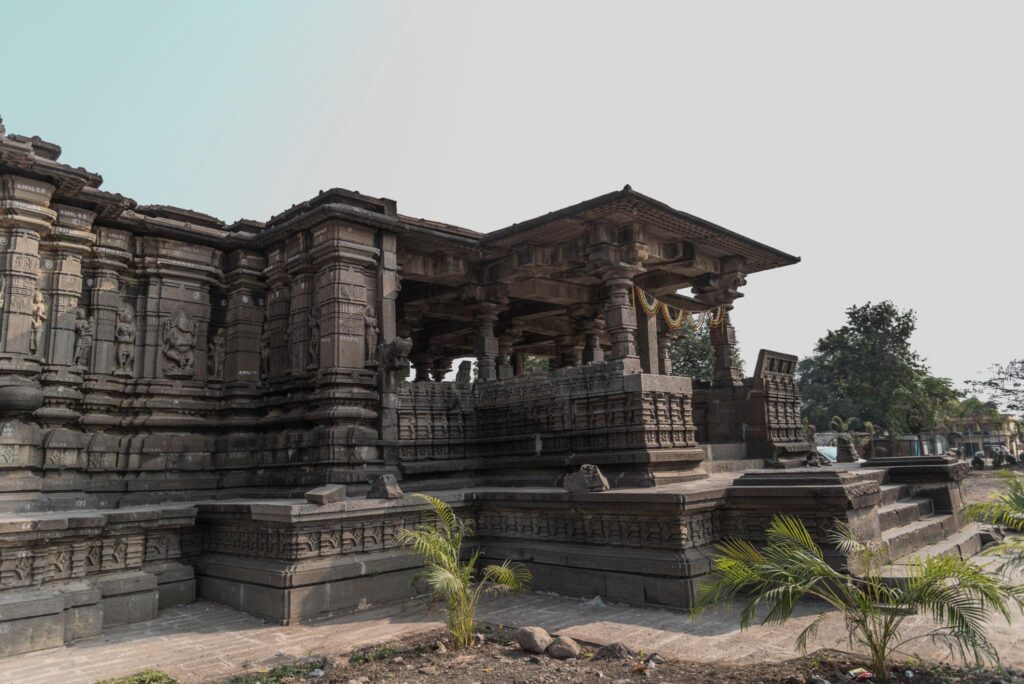
The style of construction points toward the Hemadpanti architectural tradition, commonly associated with the medieval Seuna Yadava dynasty.
Discovery of Hemadpanti Architectural Elements
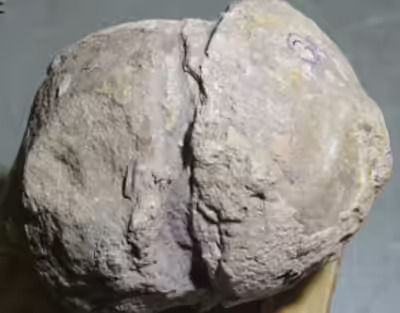
Field documentation of the site revealed several carved basalt pieces scattered across the landscape.
Among the notable fragments are:
- Pillar bases and shaft fragments
- Carved lotus motifs typical of temple architecture
- Architectural blocks likely belonging to a sabhamandap or temple hall
The basalt material and carving style strongly resemble Hemadpanti temple construction found across the Deccan region.
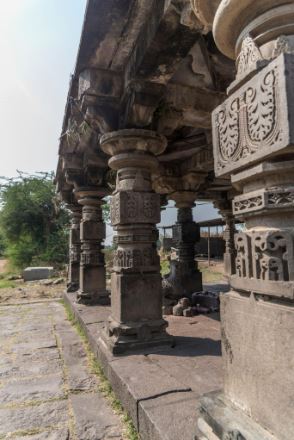
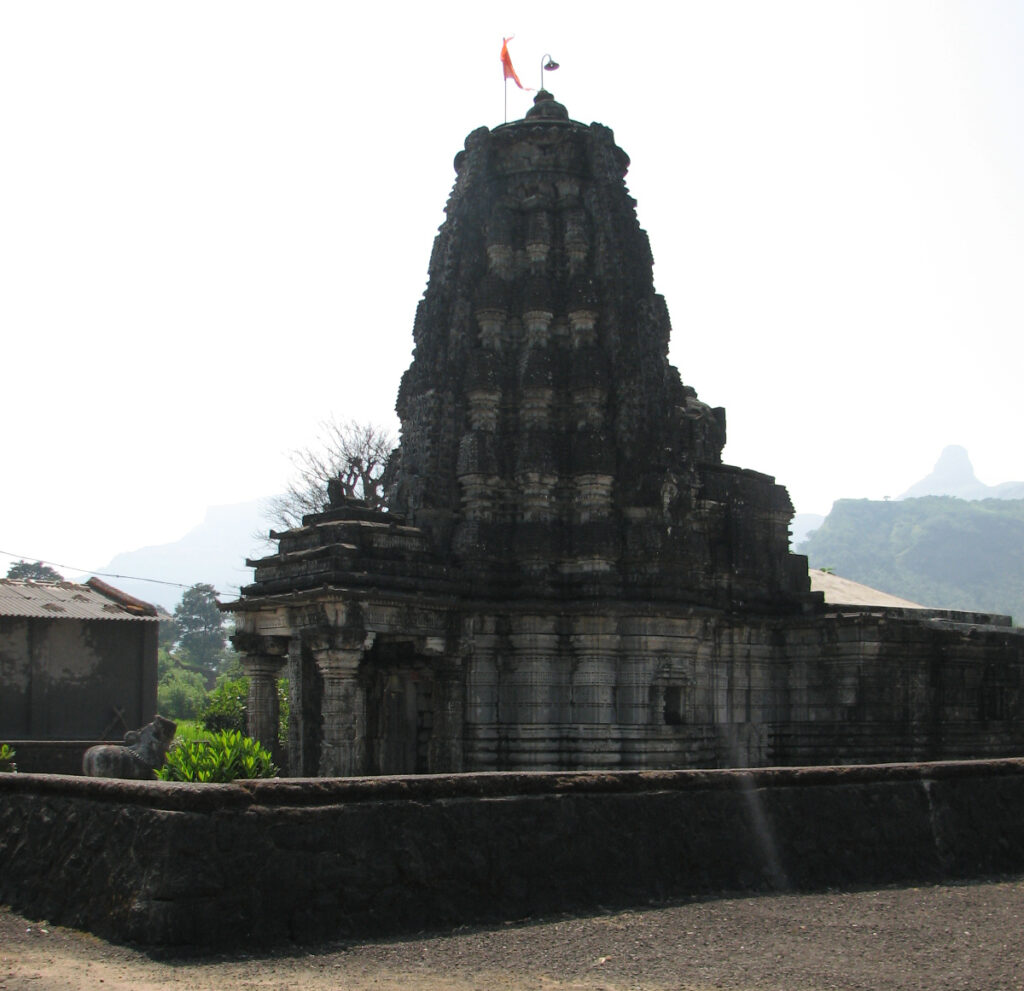
Hemadpanti Architecture of the Deccan
Hemadpanti architecture is known for its distinctive dry-stone construction technique, where large basalt blocks are carefully interlocked without the use of lime mortar.
This architectural style flourished during the rule of the Seuna Yadava dynasty (12th–14th centuries), whose capital was located at Devagiri Fort (present-day Daulatabad).
Characteristics of Hemadpanti construction include:
- Precisely cut basalt stone blocks
- Dry masonry without lime mortar
- Decorative carvings such as lotus and geometric motifs
- Strong structural durability suited to Deccan geology
What the Discovery Suggests
The scattered architectural pieces indicate that a substantial temple or assembly hall once stood near the Vena River.
Researchers believe that:
- Additional buried structural remains may still exist beneath the surface
- The site could represent a larger medieval temple complex
- The discovery supports evidence of Yadava-period prosperity in the Vidarbha region
Although the fragments may appear like ordinary black stones scattered in the landscape, they may actually be the collapsed remains of a sophisticated medieval temple structure.
Further archaeological investigation could reveal more about the extent of the complex and its historical significance.
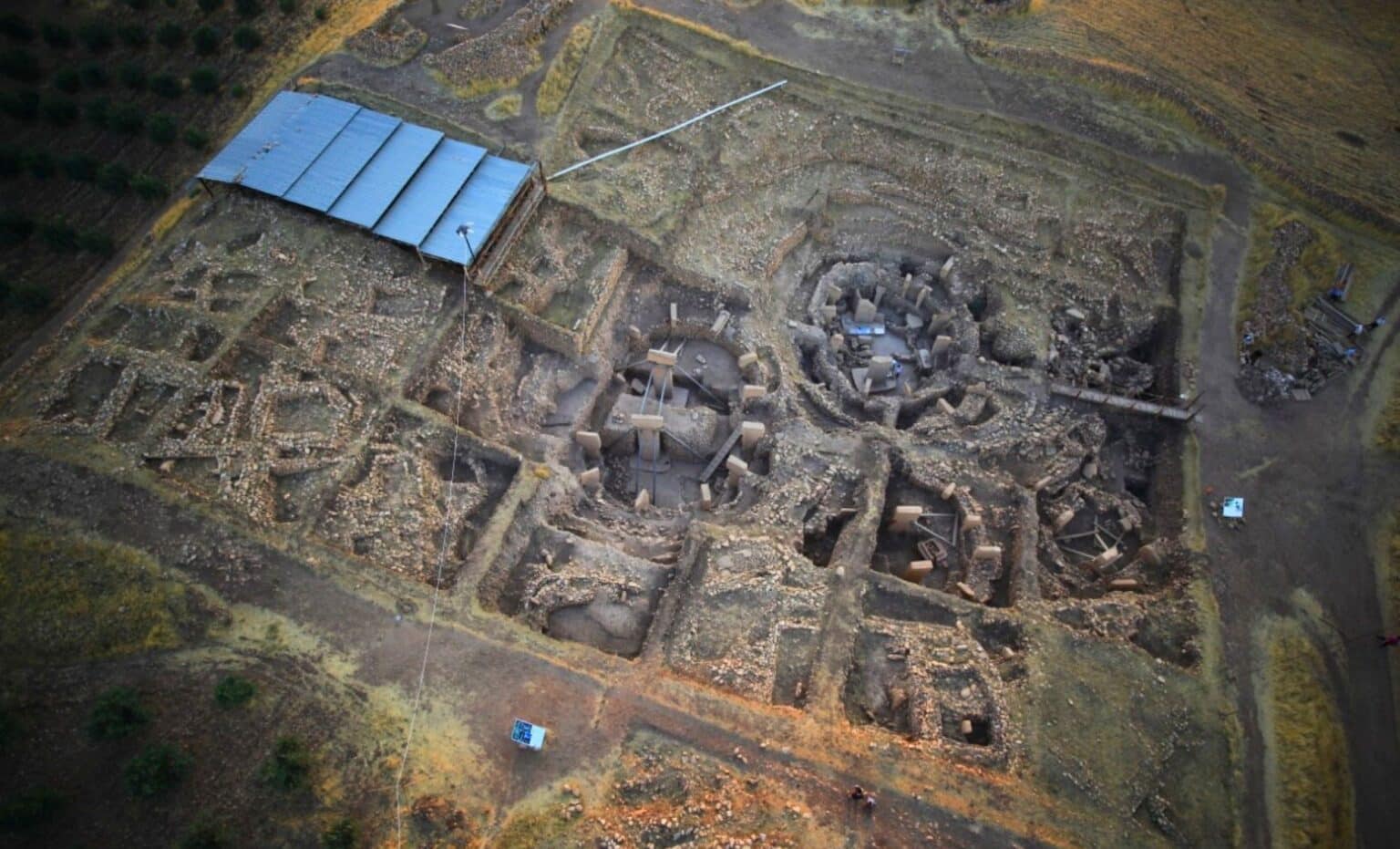
⚠️ Note: Images used in this article are representative examples of Hemadpanti architecture and basalt temple fragments from the Deccan region.