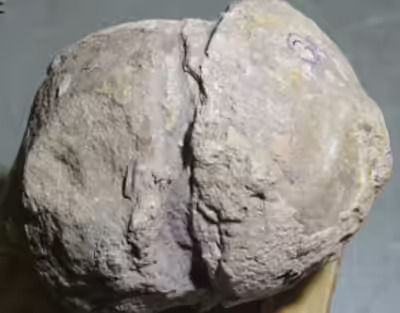

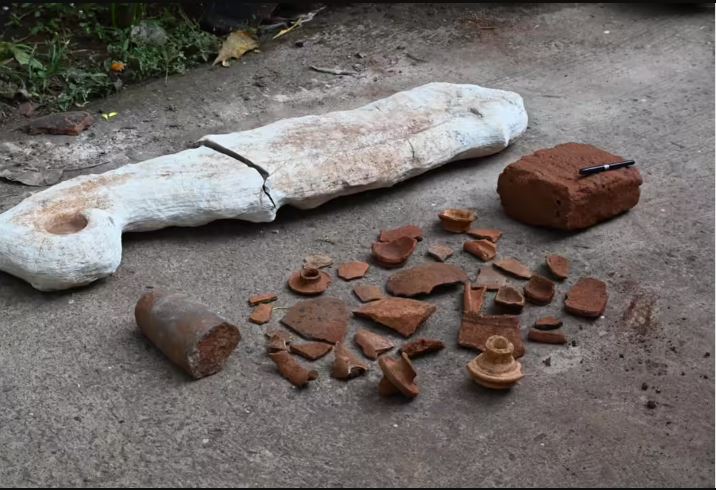
Recent discoveries of burnt bricks, laterite blocks, and carved stone architectural fragments on Divar Island have drawn the attention of archaeologists, historians, and heritage researchers. The finds—reported by local residents during routine land use—are now prompting calls for systematic archaeological investigation to determine whether unknown structures or early settlement traces lie hidden beneath the island’s landscape.
What Has Been Found?
According to preliminary observations, the materials include:
- Burnt clay bricks, often associated with durable, permanent architecture
- Laterite stone blocks, a traditional construction material widely used in Goa
- Carved stone fragments, possibly parts of pillars, mouldings, or architectural members
The presence of both structural and decorative elements suggests that the remains may belong to formal buildings rather than temporary habitation, raising the possibility of religious, administrative, or elite residential structures.
Why These Finds Are Significant
Laterite architecture has been a defining feature of Goan building traditions for centuries, especially during the early historic and medieval periods. However, the combination of burnt bricks and carved stone is particularly noteworthy. Burnt bricks often indicate planned construction, while carved fragments point to architectural sophistication and skilled craftsmanship.
Archaeologists note that such materials are rarely isolated finds. Instead, they usually form part of larger structural complexes, which may include foundations, floors, or associated cultural layers yet to be explored.
Divar Island and Goa’s Hidden Past
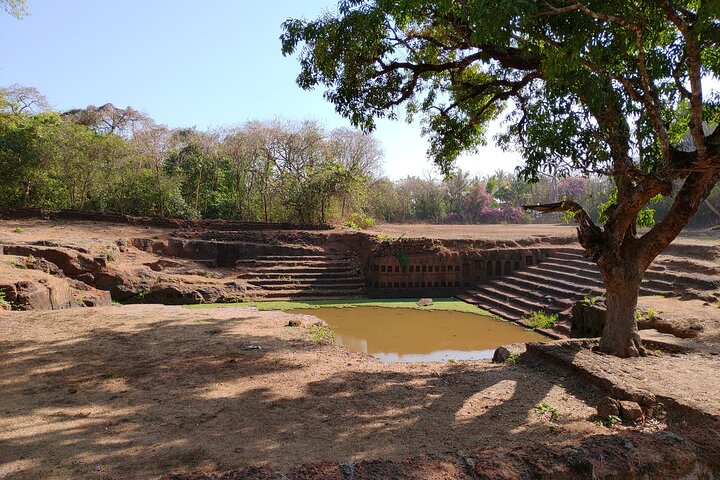
Divar Island occupies a strategic position within the Mandovi River system and has long been linked to Goa’s historical heartland. While the island is best known today for its villages and colonial-era heritage, its earlier history remains largely undocumented.
Historically, Goa witnessed successive phases of rule and cultural influence—from the Kadambas and Vijayanagara rulers to Bahmani and Portuguese powers. Archaeologists believe that inland islands like Divar may have supported satellite settlements, ritual centres, or administrative outposts connected to these larger political landscapes.
What Archaeological Investigation Could Reveal
A systematic survey and excavation could help answer key questions:
- Dating: Are the remains early historic, medieval, or transitional?
- Function: Do they belong to temples, public buildings, or residential complexes?
- Continuity: Was Divar continuously inhabited, or do these remains represent a lost phase of occupation?
Associated finds such as pottery, roof tiles, coins, or organic remains could help firmly place the site within Goa’s archaeological timeline.
The Need for Protection and Documentation
Experts emphasize that early documentation is crucial. Unprotected archaeological remains are vulnerable to erosion, construction activity, and material reuse. Proper recording, followed by scientific excavation if warranted, could ensure that Divar’s buried heritage is preserved and integrated into Goa’s broader historical narrative.
A Window Into an Unexplored Chapter
The discoveries at Divar Island serve as a reminder that much of India’s past still lies beneath the ground, waiting to be studied. If investigated further, these burnt bricks and carved stones could open a new chapter in understanding Goa’s pre-colonial and early historic settlement patterns.
As archaeological interest grows, Divar may soon emerge not just as a scenic island, but as a key site in uncovering the deeper layers of Goan history.