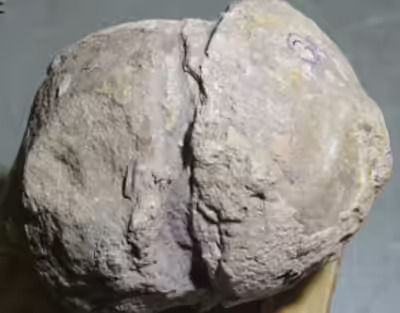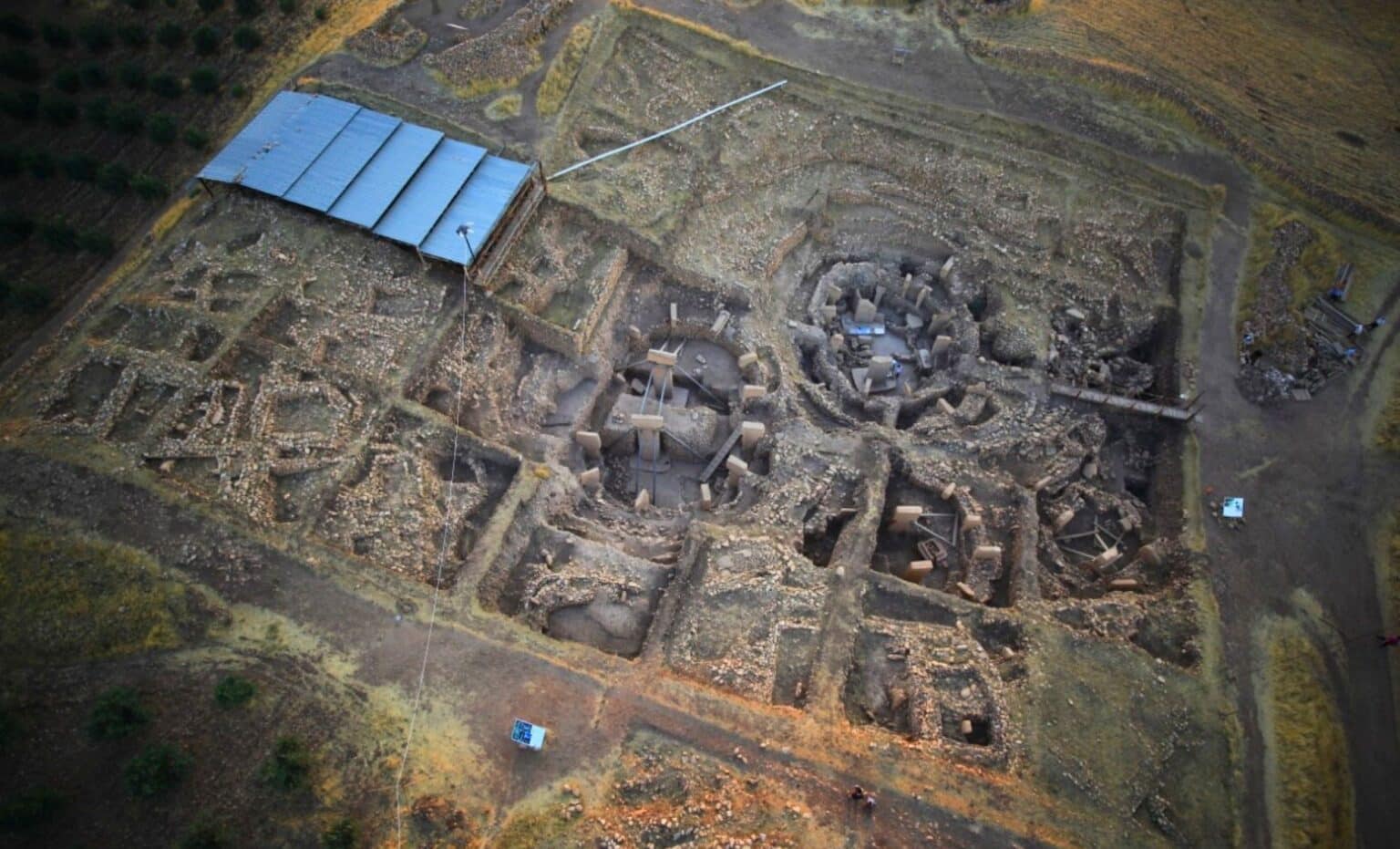

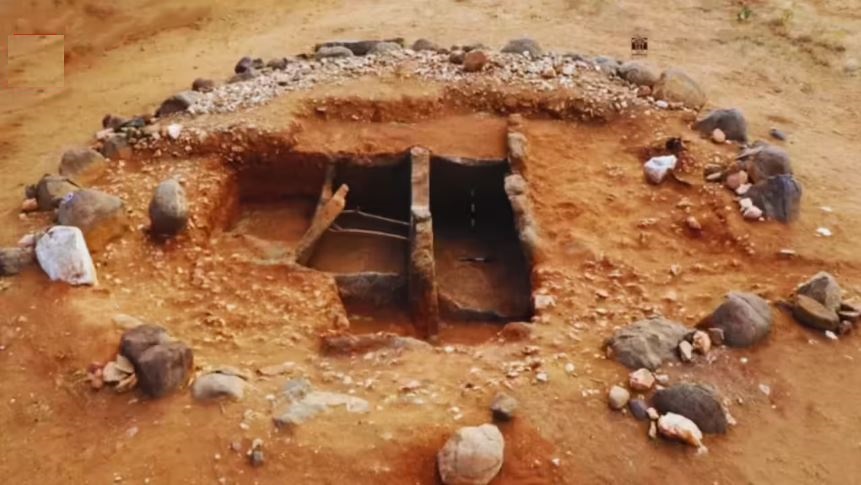
Recent excavation reports from the Archaeological Survey of India (ASI) have once again brought national attention to Kodumanal, an important Early Historic settlement in Tamil Nadu. Fresh findings reinforce the site’s identity as a thriving craft production centre and trade hub dating to the 4th–3rd century BCE.
Located along ancient inland trade routes, Kodumanal continues to reshape our understanding of early industrial activity in South India.
Historical Background of Kodumanal
Kodumanal is widely regarded as one of Tamil Nadu’s most significant Early Historic archaeological sites. Earlier excavations had already revealed:
- Industrial debris
- Bead-manufacturing units
- Iron-smelting evidence
- Burial structures
The latest ASI findings further strengthen the interpretation of Kodumanal as a well-organized settlement with specialized craft communities, active during a period traditionally associated with early Tamil polities.
🔎 Key Archaeological Discoveries
1. Tamil-Brahmi Inscribed Pottery
Fragments of pottery bearing Tamil-Brahmi inscriptions were unearthed during the recent excavation season. These inscriptions suggest:
- Presence of literacy
- Ownership or merchant marks
- Organized economic activity
The use of early scripts indicates structured social and commercial interactions within the settlement.
💎 2. Semi-Precious Stone Bead Industry
Excavations have yielded finished and unfinished beads made from:
- Carnelian
- Agate
- Quartz
- Garnet
The discovery of bead-making debris confirms local production rather than mere trade consumption. Raw materials likely arrived through trade networks, while finished products may have been distributed across southern India and beyond.
This positions Kodumanal as a key industrial node within ancient exchange systems.
⚒️ 3. Iron Smelting & Metallurgical Evidence
One of the most significant aspects of Kodumanal is its evidence of advanced iron technology:
- Iron slag
- Furnace remains
- Metallurgical tools
These findings demonstrate large-scale iron production, supporting agriculture, warfare, and trade activities. The technological sophistication suggests organized craft specialization long before the rise of later imperial centres.
🌍 Trade Networks & Strategic Location
Kodumanal’s geographic placement indicates connectivity with:
- Western Tamil regions traditionally associated with the Chera polity
- Inland caravan trade routes
- Riverine networks linking resource zones
The diversity of materials discovered implies participation in wide-ranging economic networks during the Early Historic period.
🧠 Why Kodumanal Matters in Indian Archaeology
Kodumanal is significant because it:
- Demonstrates early industrial-scale craft specialization
- Provides material evidence of literacy in early Tamil society
- Highlights South India’s technological capabilities before the Common Era
- Reinforces the region’s participation in long-distance trade
The site challenges older narratives that limited early industrial complexity primarily to northern urban centres.
Conclusion
The continuing excavations at Kodumanal by the Archaeological Survey of India underscore the importance of systematic archaeological investigation in understanding India’s early past. Each layer uncovered strengthens the view that peninsular India was home to vibrant, technologically advanced communities actively engaged in craft production and trade as early as the 4th–3rd century BCE.
Kodumanal stands today not just as an excavation site, but as a testimony to South India’s early industrial and commercial dynamism.