
The recent public display of the Piprahwa Buddha relics in India has reignited global attention on one of the most important—and controversial—discoveries in Buddhist archaeology. More than just precious gems, these relics represent the earliest material expressions of Buddhist faith, relic worship, and sacred memory.
But a crucial question remains:
Do we still have the original site and original archaeological evidence?
The answer is yes—and this blog explores both.
The Piprahwa Discovery: A Brief Background
n 1898, a large brick stupa at Piprahwa, near the India–Nepal border, was excavated by William Claxton Peppe. Beneath the stupa mound, archaeologists uncovered:
- A sandstone relic casket
- An inscribed lid in early Brahmi
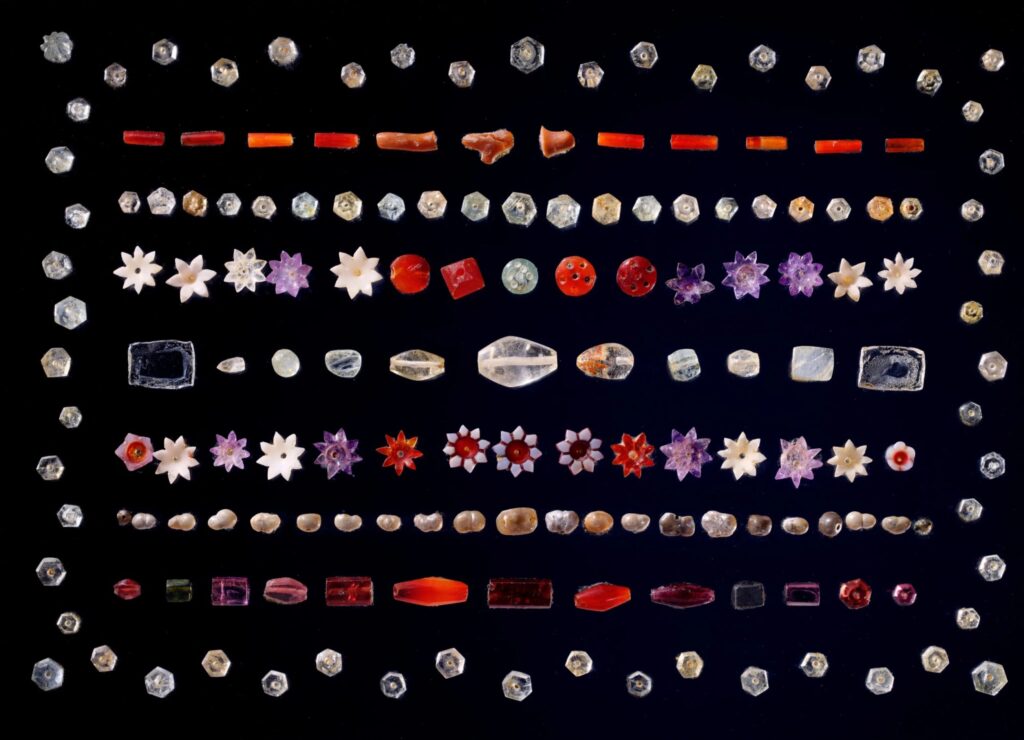
- Hundreds of semi-precious stones (amethyst, carnelian, garnet, crystal, pearl)
The inscription referred to relics of Gautama Buddha, deposited by the Sakyas, his own clan.
This discovery placed Piprahwa among the earliest physical links to the historical Buddha.
The Original Site Today: Piprahwa Stupa Still Exists
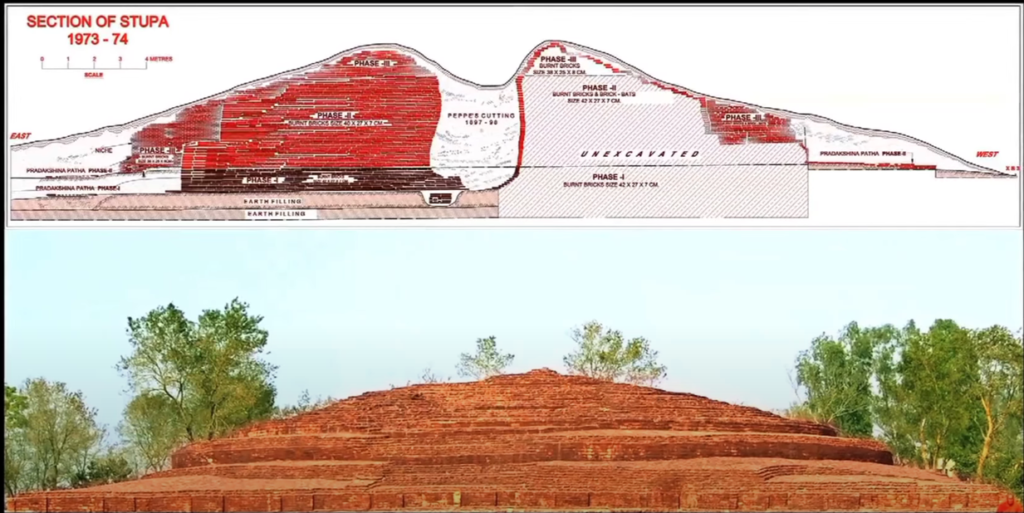
Contrary to common belief, Piprahwa is not a lost site.
What survives today:
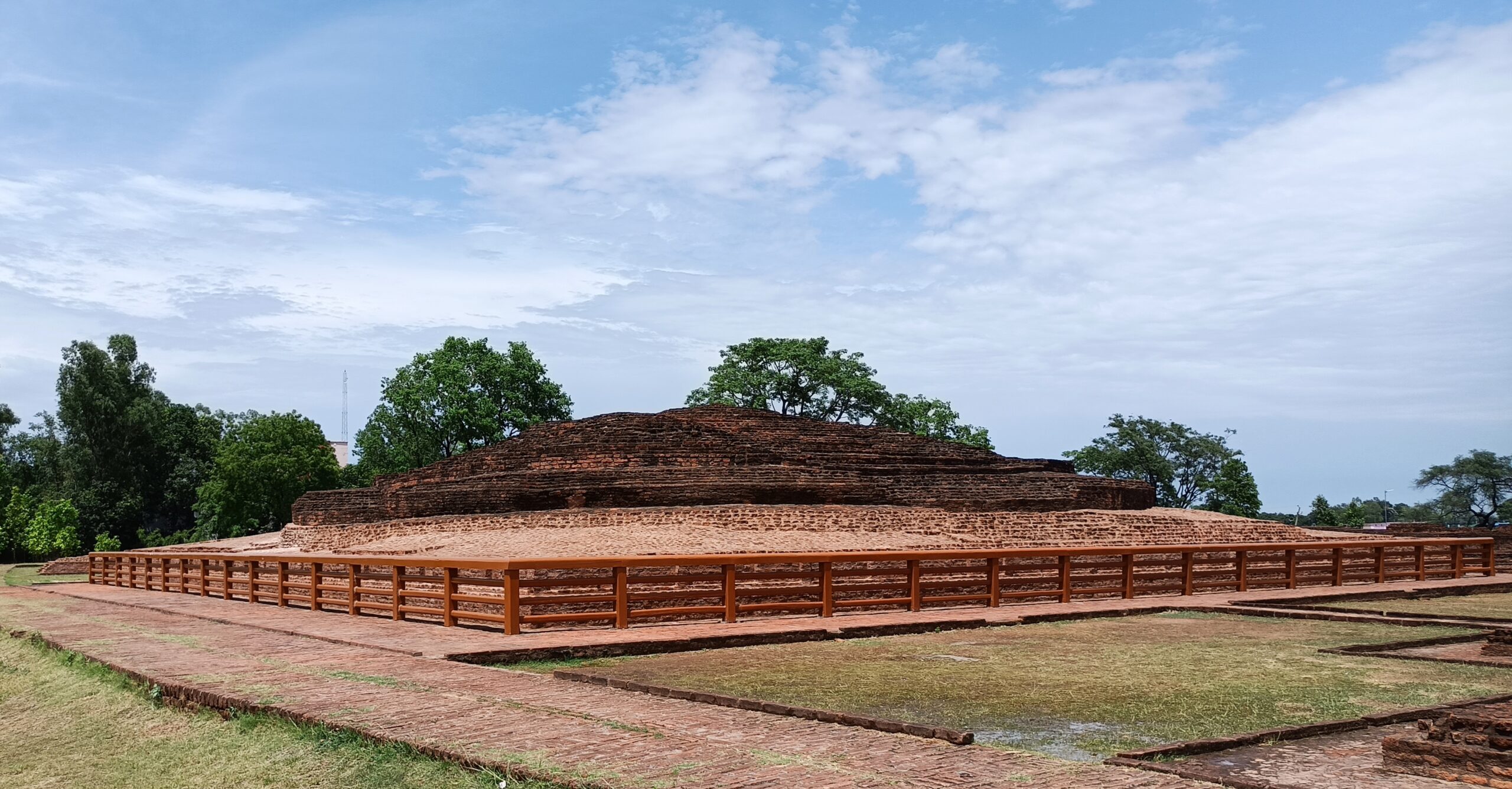
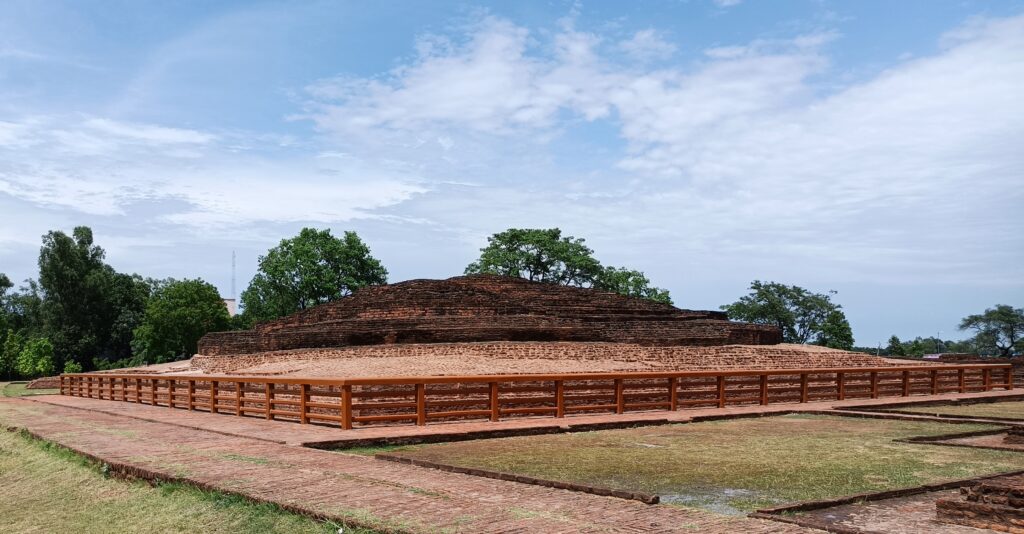
- The excavated stupa mound
- Exposed brick structures
- Archaeological trenches from multiple excavation phases
- ASI signage and protection
The site is officially maintained by the Archaeological Survey of India.
🔎 Important note:
The exact relic chamber is not left open to the public. Like many sacred archaeological contexts, it is preserved through documentation, not display.
Do Original Excavation Photographs Exist? Yes.
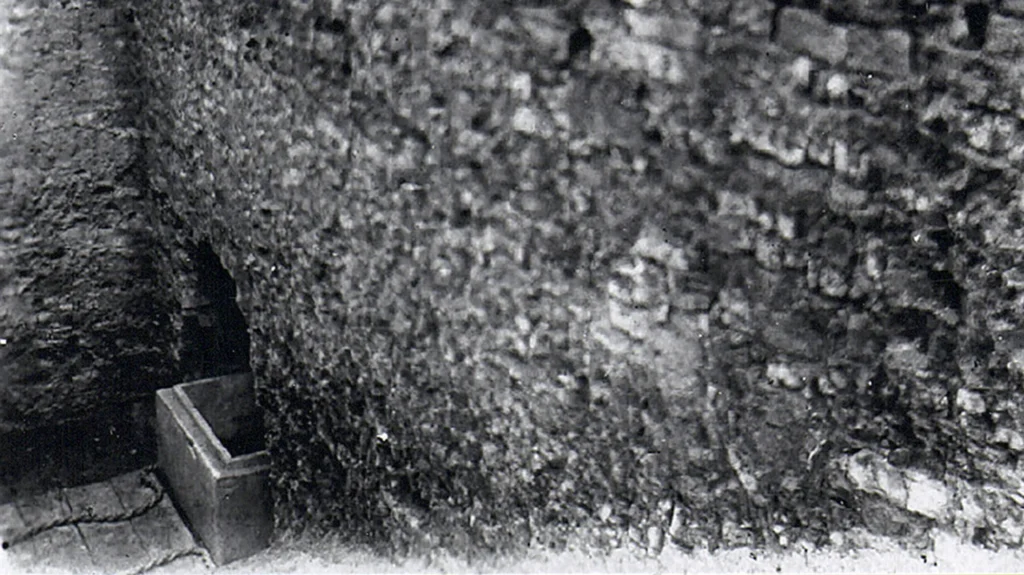
One of the strongest aspects of the Piprahwa discovery is that it was photographically documented, which was rare for the late 19th century.
What was photographed:
- The stupa during excavation
- The stone relic casket
- The Brahmi inscription
- The jewel assemblage (before dispersal)
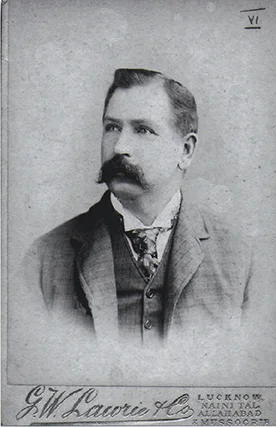
These photographs were taken under the supervision of W. C. Peppe and later circulated in academic circles.
Where are these images preserved?
- British Library archives
- Royal Asiatic Society collections
- Early excavation reports
- Later ASI publications and museum catalogues
⚠️ Most original photos are archival and not freely downloadable, but verified reproductions are used in museums and research.
Later Excavations and Indian Scholarship
In the 1970s, the site was re-excavated by K.M. Srivastava, who uncovered earlier construction phases of the stupa, strengthening the argument that Piprahwa was a primary relic site, not a later symbolic shrine.
These findings firmly placed Piprahwa within the Mauryan–Shunga period, aligning it chronologically with early Buddhist expansion under Ashoka.
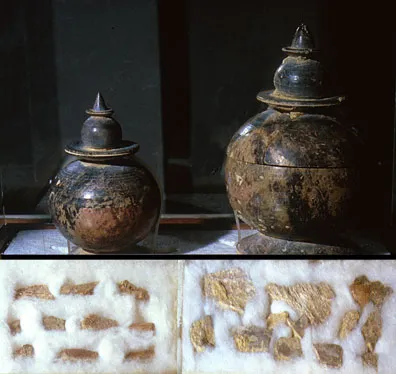
Why Were the Relics Abroad for So Long?
After excavation during colonial rule, many Piprahwa relics were:
- Distributed to foreign institutions
- Entered private collections
- Removed from Indian public access for decades
Only recently, through coordinated efforts involving the Government of India, cultural institutions, and private stakeholders, have these gems been reunited and publicly displayed in New Delhi.
Beyond Archaeology: Heritage, Ethics, and Diplomacy
The return of the Piprahwa gems is not merely symbolic.
It raises deeper questions:
- Who owns sacred heritage?
- How should colonial-era discoveries be handled today?
- Can archaeology serve as a bridge in cultural diplomacy?
Piprahwa shows that archaeology does not end at excavation. Its consequences continue for centuries—shaping identity, belief, and international dialogue.
Conclusion: A Living Archaeological Legacy
The Piprahwa Buddha relics remind us that:
- The original site still exists
- Original photographs still exist
- The debate around ownership, faith, and ethics is ongoing
More than jewels, these relics are archaeology in motion—connecting ancient devotion, colonial history, and modern cultural responsibility.
For Indian archaeology, Piprahwa stands as a rare case where text, material, image, and belief intersect—and where the past continues to speak powerfully to the present.
Image source: ASI publications / British Library archives / Museum catalogues (used for academic and educational purposes).