
🌊 Unearthing the Lost Saraswati: ASI Discovers a 3,500-Year-Old Settlement in Rajasthan
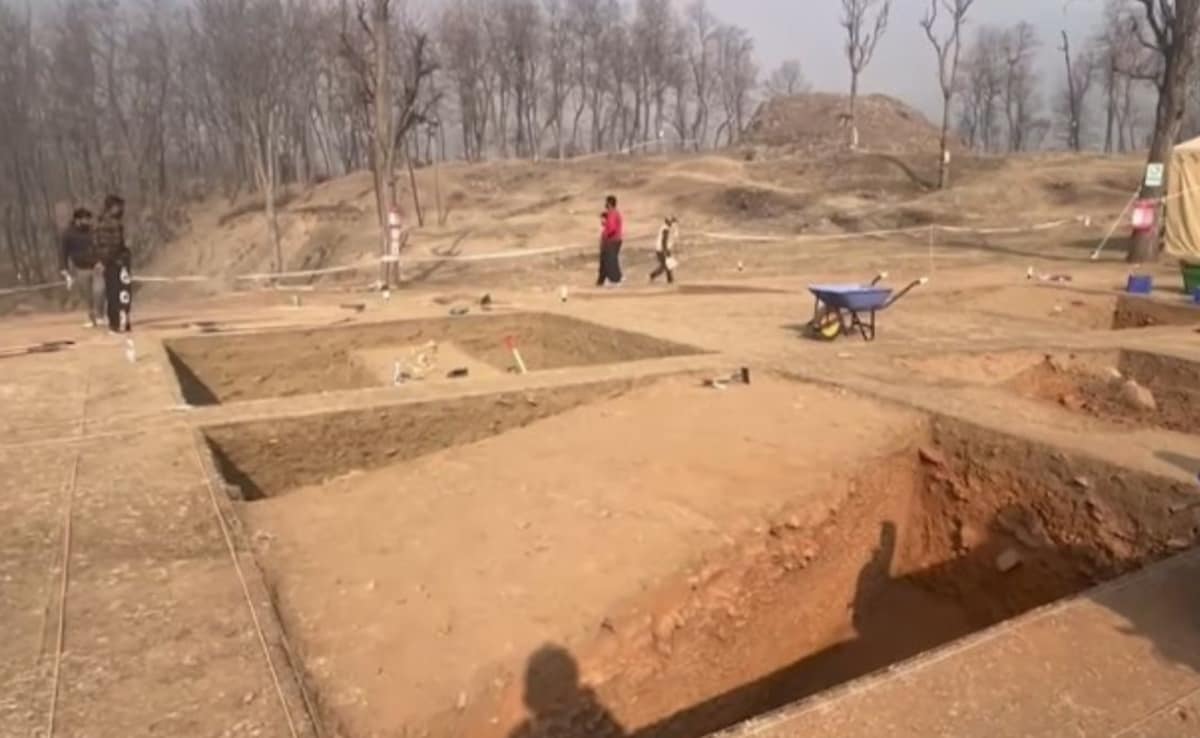
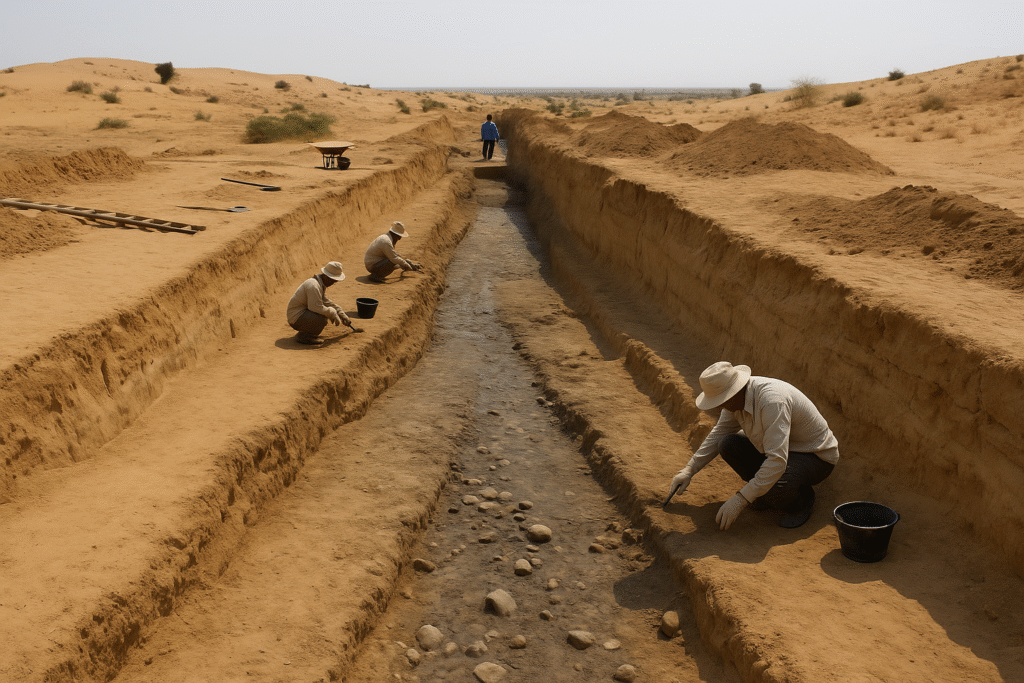
The sands of Rajasthan have once again whispered stories from the past. In a groundbreaking discovery, the Archaeological Survey of India (ASI) has unearthed the remains of a 3,500-year-old settlement in Bahaj village, Deeg district, Rajasthan. Hidden beneath layers of alluvium, this site revealed traces of an ancient riverbed, possibly belonging to the long-lost Rig-Vedic Saraswati River.
This revelation is not just another archaeological find — it may redefine India’s early cultural geography by linking material evidence with sacred Vedic literature.
🌍 Discovery of an Ancient River Channel
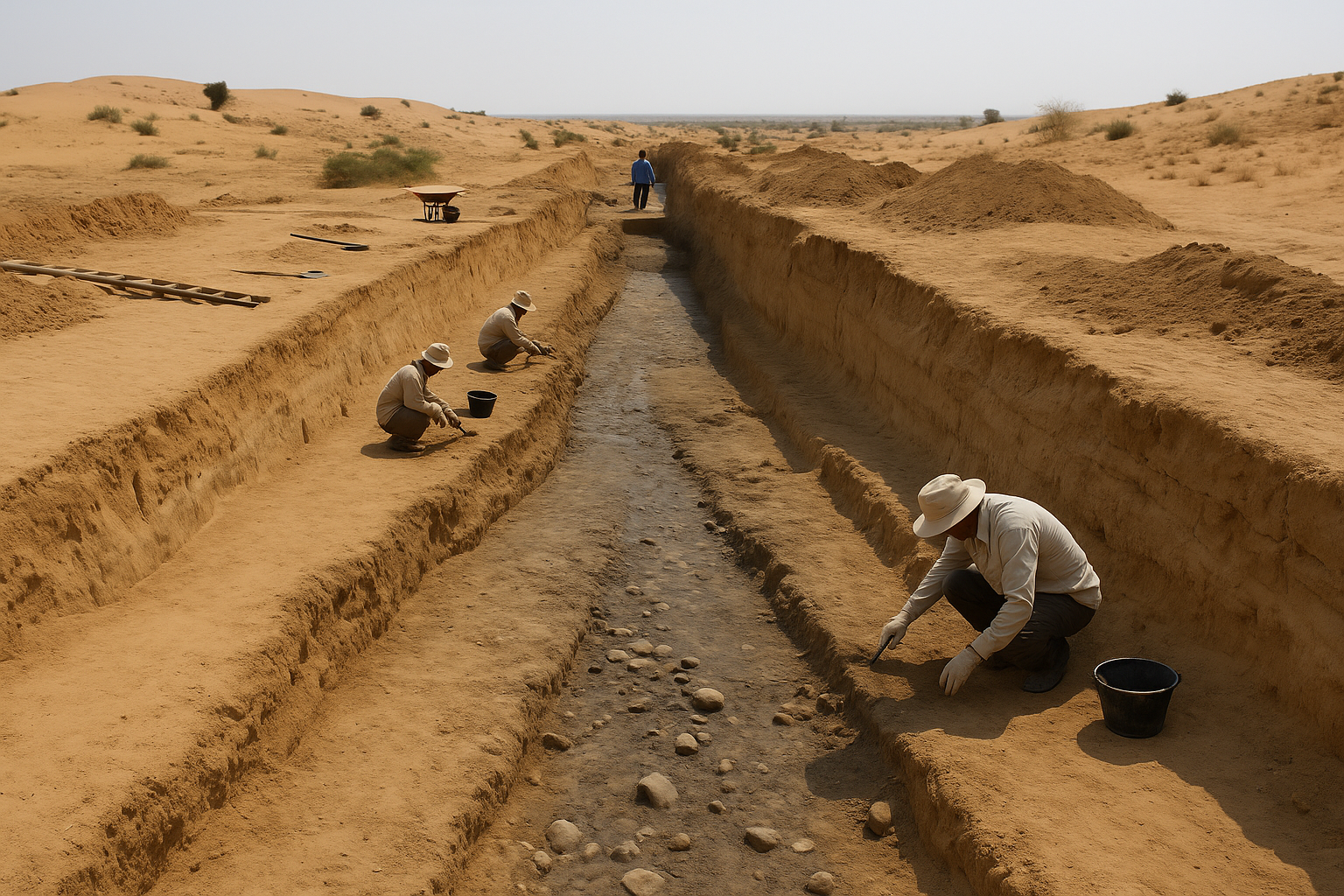
While studying the geomorphology of the region, ASI archaeologists traced a palaeochannel (ancient river course) almost 23 metres below the surface — a depth rarely recorded in Indian excavations. Geological samples suggest this channel may have once been part of the Saraswati, described in the Rig Veda as a mighty river sustaining early settlements.
If confirmed, this find strengthens long-standing theories about a Saraswati-Ghaggar-Hakra river system, indicating that early civilizations flourished along this fertile corridor thousands of years ago.
🧱 Layers of Civilization: 3500 BC – 1000 BC
The Bahaj site reveals five cultural phases, spanning over two millennia of habitation.
- Prehistoric traces: Microlithic tools and early pottery indicate human presence even before the Bronze Age.
- Metal Age evidence: Iron and copper furnaces show advanced metallurgical skills.
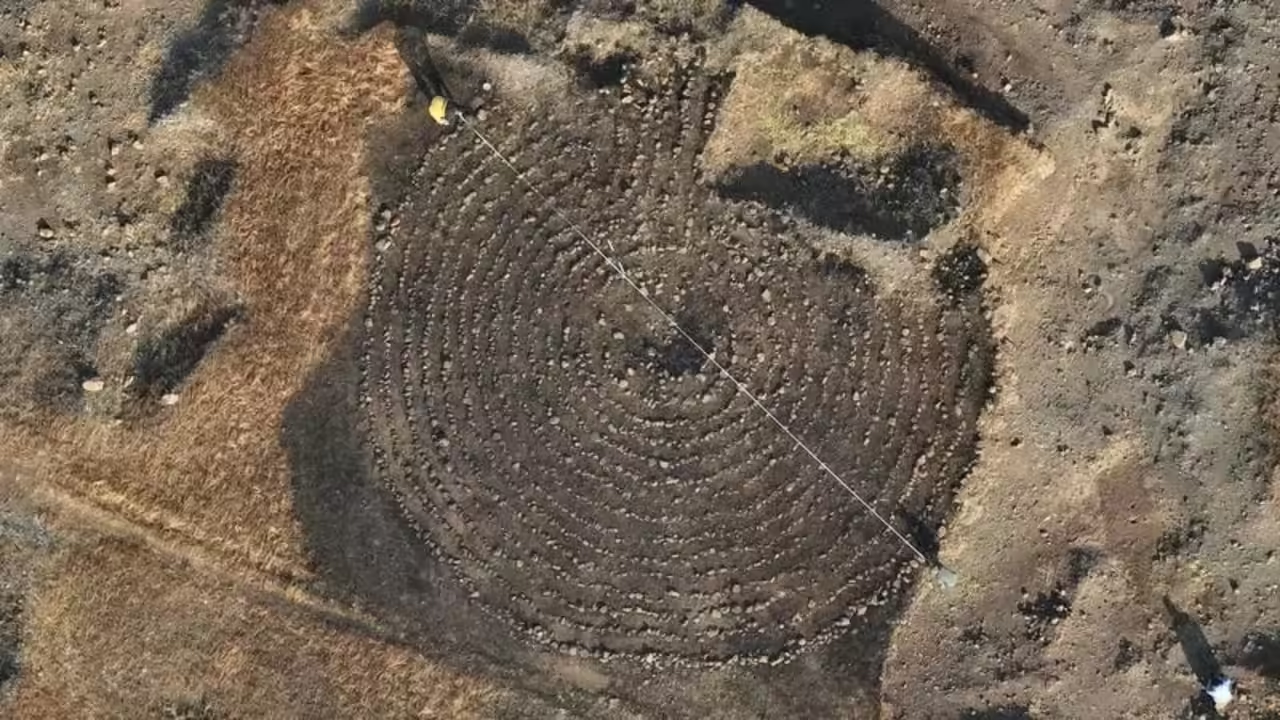
- Ritual spaces: Nearly 15 yajna-kundas (fire altars) and votive tanks dedicated to Shakti worship suggest deep ritual practices.
- Iconography: Terracotta figurines of Shiva and Parvati, dated around 1000 BC, point to the evolution of religious art.
🔤 Scripts, Seals & Early Trade
Among the most striking discoveries are four unbaked seals, two engraved with early Brahmi script, possibly among the oldest examples of writing found in India.
Artefacts such as bone tools, shell bangles, and semi-precious stone beads indicate craftsmanship and active trade links. The presence of small copper coins hints at early economic systems.
🔥 The Spiritual Heart of the Settlement
The arrangement of altars and votive pits reveals a community steeped in ritual tradition. The findings resonate with Rig Vedic hymns that praise Saraswati as “ambitame, naditame, devitame” — the greatest of mothers, rivers, and goddesses.
These parallels between text and archaeology illuminate how faith and daily life intertwined in early Indian civilization.
🧭 Why This Discovery Matters
This excavation could reshape how we view ancient India:
- Establishes Rajasthan as a vital link in the Saraswati river system.
- Provides geo-archaeological proof aligning with Vedic references.
- Offers insight into metallurgy, urban planning, trade, and early script.
- Opens pathways for heritage tourism and academic research.
The ASI has submitted detailed reports to the Ministry of Culture, proposing long-term preservation and visitor development for Bahaj as a national heritage site.
🕉️ Rediscovering Saraswati’s Legacy
The Bahaj excavation bridges myth and history, reminding us that many ancient stories are rooted in real landscapes. As new evidence surfaces, the once-mystical Saraswati may soon stand as a scientifically mapped and archaeologically confirmed river system, reshaping India’s civilizational map.