
🏺 A Major Epigraphic Discovery in Telangana
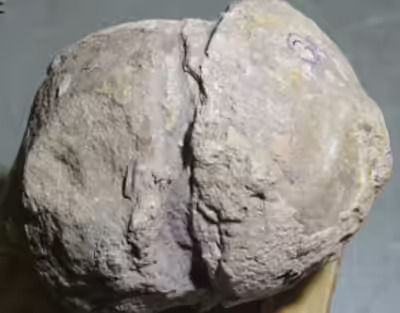
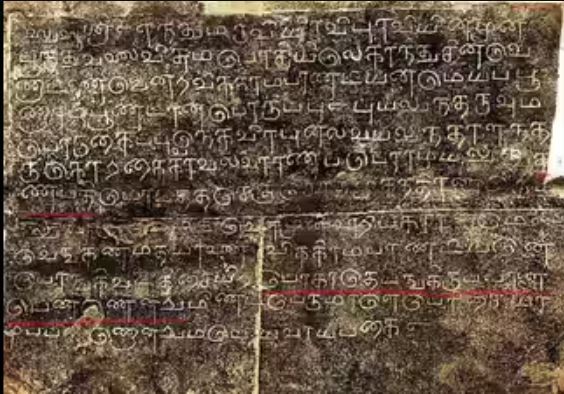
In a significant development for Deccan archaeology, researchers in Telangana have reportedly rediscovered the death inscription of Queen Rudramadevi beneath a stone pillar. This epigraphic find provides a precise historical date for her passing, resolving long-standing debates in medieval South Indian chronology.
For historians of the Deccan, this is not just another inscription — it is a chronological anchor that strengthens our understanding of 13th-century political transitions.
👑 Who Was Rudramadevi?
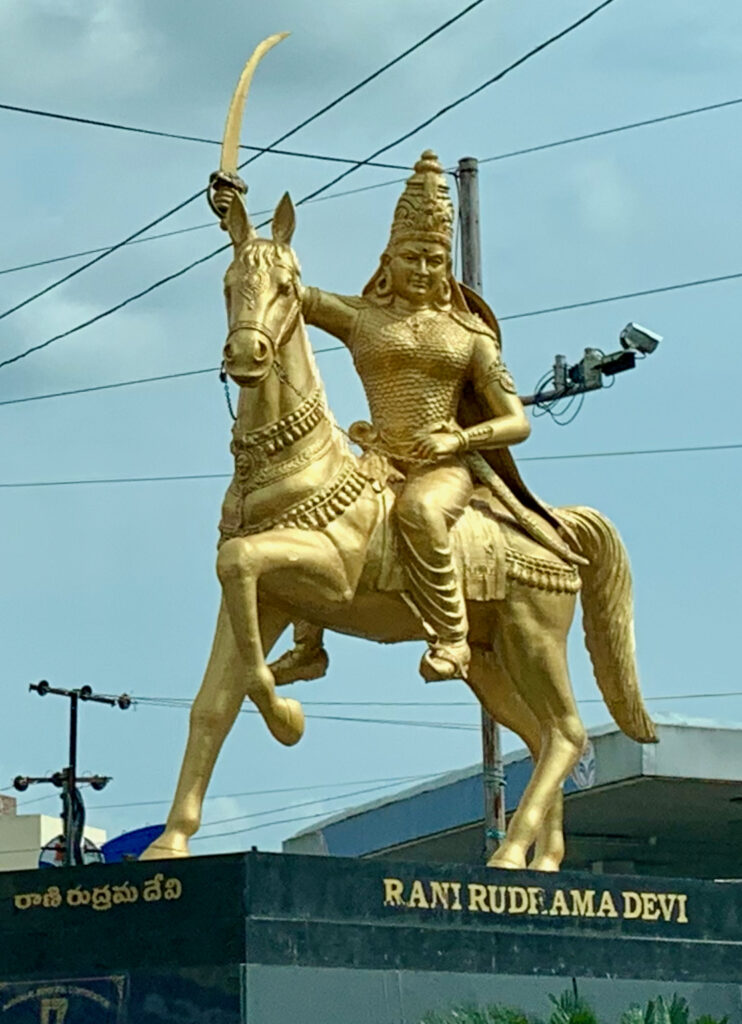
Rudramadevi (r. c. 1262–1289 CE) was one of the rare ruling queens in Indian medieval history. She governed the powerful Kakatiya dynasty, whose capital was at Warangal.
Key Highlights of Her Reign:
- Strengthened the fortifications of Warangal
- Expanded irrigation networks and tank systems
- Maintained administrative continuity in a turbulent era
- Led military campaigns against regional chieftains
Notably, she adopted the male royal title Rudradeva Maharaja, a strategic political move to consolidate authority in a patriarchal feudal structure.
What Does the Rediscovered Inscription Reveal?
According to preliminary reports:
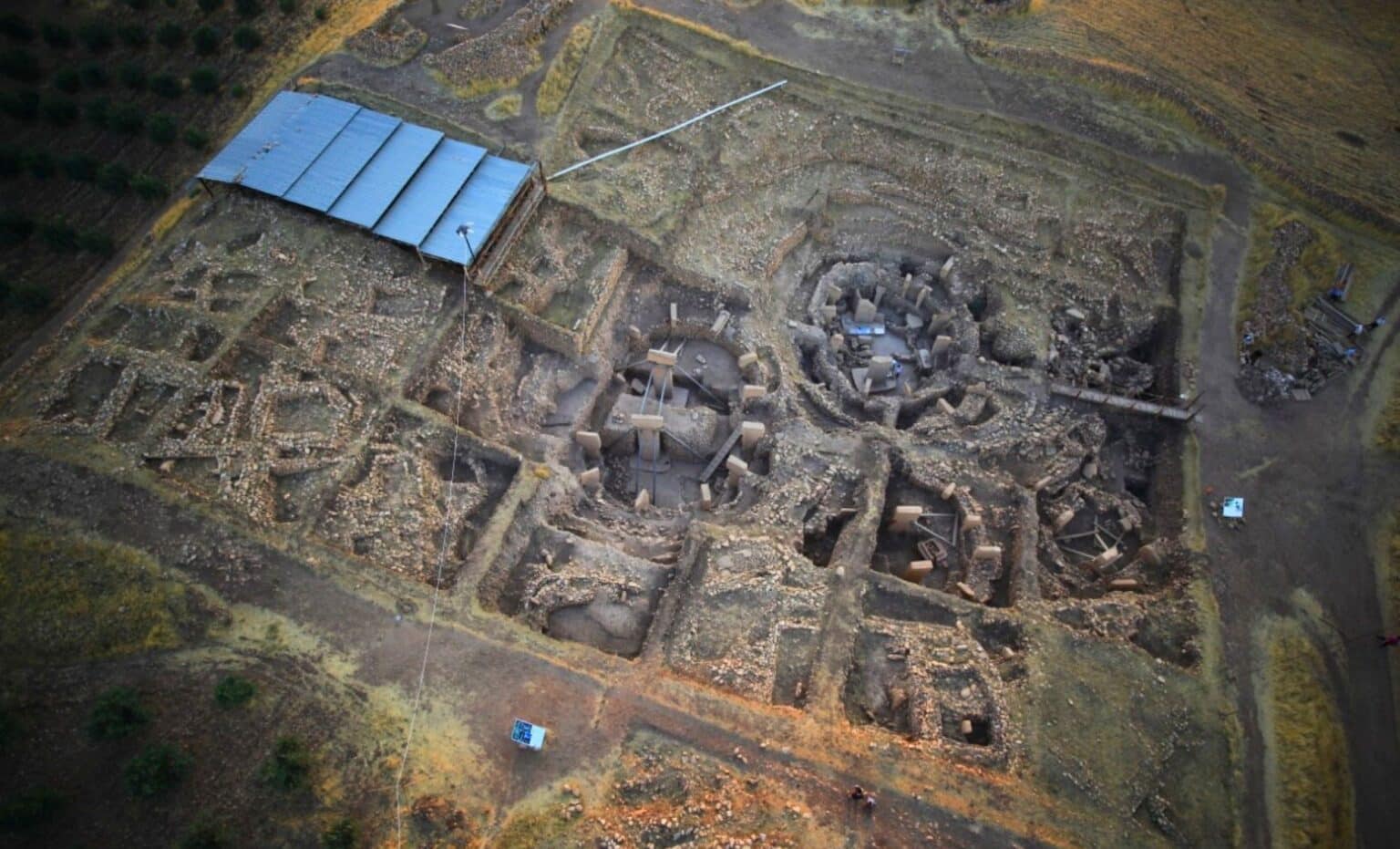
- The inscription was discovered beneath a stone pillar structure.
- It records the exact date of Rudramadevi’s death.
- It likely confirms her death in battle.
- It refines the late 13th-century Deccan political timeline.
For decades, historians relied on scattered inscriptions and literary references suggesting she died around 1289 CE, possibly during conflict with Kayastha chief Ambadeva. A clearly dated epigraph strengthens this interpretation and reduces chronological ambiguity.
Why Inscriptions Matter
Unlike court poetry or later chronicles, inscriptions are:
- Contemporary administrative records
- Less prone to exaggeration
- Often precisely dated
- Linked to land grants, temple donations, or political events
In Deccan historiography, where literary sources are limited, epigraphy is the backbone of reconstruction.
🏰 Political Impact on the Medieval Deccan
The Kakatiya state was a major regional power between the Western Chalukyas and the later Deccan Sultanates. The confirmation of Rudramadevi’s death date helps historians better understand:
- The succession of Prataparudra II
- Internal rebellions and feudal fragmentation
- The weakening of Kakatiya authority
- The political landscape before the Delhi Sultanate incursions
Her death marked a transitional phase that eventually culminated in the fall of Warangal in the early 14th century.
🏛 Archaeological Significance of the Discovery
From an archaeological perspective, this rediscovery highlights:
1️⃣ The Value of Field Epigraphy
Many inscriptions remain undocumented in rural temple complexes, pillars, and reused architectural fragments.
2️⃣ The Importance of Context
Finding the inscription beneath a pillar raises questions:
- Was it relocated?
- Was it reused in later construction?
- Was it deliberately preserved?
3️⃣ Chronological Precision
A single inscription can recalibrate decades of academic assumptions. Medieval Deccan chronology depends heavily on such dated records.
📜 Women in Medieval Indian Polity
Rudramadevi stands as one of the most powerful female sovereigns in Indian history. Her reign challenges assumptions about gender roles in medieval India. She ruled not as a regent, but as a monarch in her own right.
Her rediscovered death inscription does more than confirm a date — it reaffirms her historical presence in the political fabric of the Deccan.
What Comes Next?
For historians and archaeologists, further steps may include:
- Detailed epigraphic documentation
- Paleographic analysis
- Cross-referencing with other Kakatiya records
- Publication in peer-reviewed journals
- Conservation of the inscription site
If authenticated and published formally, this inscription will become a critical reference point in Deccan studies.
📌 Conclusion
The rediscovery of Queen Rudramadevi’s death inscription in Telangana is a landmark moment for medieval Indian history. It sharpens our understanding of Kakatiya chronology, clarifies succession patterns, and reinforces the centrality of epigraphy in archaeological research.
In the study of the past, dates matter — and sometimes, a single stone inscription can reshape an entire chapter of history.