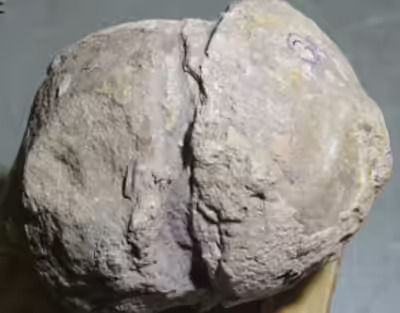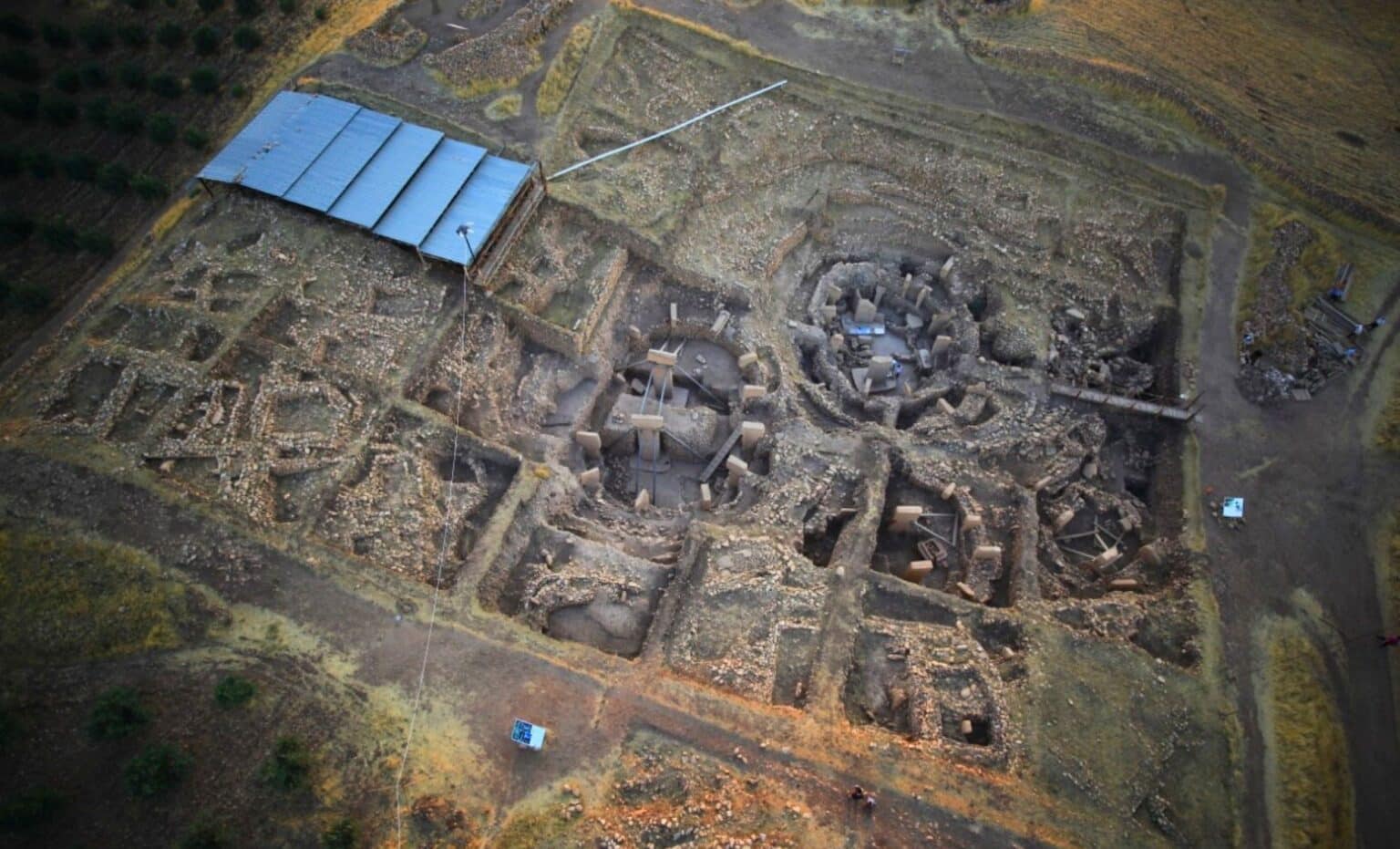

Recent discussions circulating online claim that Tamil-Brahmi inscriptions were discovered inside royal tomb complexes in Egypt’s Valley of the Kings, dated to the 1st century CE.
However, careful archaeological review shows that while Tamil-Brahmi inscriptions have indeed been discovered in Egypt, they are documented at Red Sea trade ports, not inside the royal tomb chambers of the Valley of the Kings.
This article presents the authenticated archaeological evidence and clarifies the historical context.
What is Tamil-Brahmi?
Tamil-Brahmi is the earliest script used to write Old Tamil, generally dated between the 3rd century BCE and 3rd century CE.
It represents:
- Adaptation of Brahmi script for Dravidian phonetics
- Early literacy in South India
- Strong trade-linked inscriptional culture
Important Tamil-Brahmi sites in India include:
- Arikamedu
- Kodumanal
- Alagankulam
These were major trade-linked settlements connected to the Indian Ocean network.
Confirmed Evidence in Egypt: Berenike Port
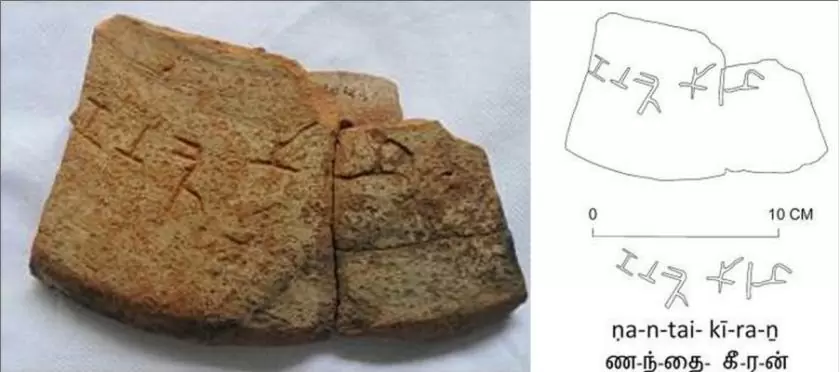
The strongest archaeological evidence comes from:
📍 Berenike (Egypt)
Berenike was a major Roman trade port on Egypt’s Red Sea coast, active during the 1st century CE.
Excavations led by international teams have revealed:
- Tamil-Brahmi graffiti on pottery
- South Indian black pepper remains
- Indian beads and textiles
- Roman amphora fragments linked to Indian Ocean trade
The black pepper found at Berenike is especially significant because Piper nigrum is native to South India — particularly the Malabar region.
These discoveries confirm:
✔ Direct maritime trade between Tamil regions and Roman Egypt
✔ Presence of Tamil-speaking merchants or sailors
✔ Active Indo-Roman commercial networks
What About the Valley of the Kings?
📍 Valley of the Kings
The Valley of the Kings near Luxor was primarily used during Egypt’s New Kingdom (c. 1550–1070 BCE) — over a thousand years before peak Indo-Roman trade.
As of currently published peer-reviewed archaeological records:
- Tamil-Brahmi inscriptions are documented at Red Sea trade ports.
- There is no widely accepted academic confirmation of Tamil-Brahmi inscriptions inside royal tomb chambers in the Valley of the Kings.
This distinction is crucial for responsible historical reporting.
The Indo-Roman Trade Network (1st Century CE)
Ancient maritime trade routes connected:
- South India
- Arabian Peninsula
- Red Sea ports
- Roman Mediterranean markets
The Greek text Periplus of the Erythraean Sea (1st century CE) describes trade between Tamil ports and Egyptian Red Sea ports.
Key Egyptian trade ports:
- Berenike
- Myos Hormos
Goods traded included:
- Pepper
- Ivory
- Pearls
- Textiles
- Precious stones
- Roman gold coins
Large quantities of Roman aurei and denarii have been discovered in Tamil Nadu, strengthening the trade evidence.
Why This Discovery Matters
The Tamil-Brahmi inscriptions at Berenike demonstrate:
- Early globalization across the Indian Ocean
- Literacy among merchant communities
- Cross-cultural contact between South India and Roman Egypt
- Maritime sophistication of ancient Tamil traders
This is not myth.
It is archaeologically documented exchange.
Responsible Archaeology: Separating Fact from Viral Claims
As researchers and content creators, especially at platforms like The Indian Archaeology, it is important to:
- Verify claims against peer-reviewed evidence
- Distinguish trade-port inscriptions from royal necropolis contexts
- Avoid sensational interpretations without published confirmation
The documented evidence is already powerful — it does not need exaggeration.
Conclusion
Tamil-Brahmi inscriptions have been securely documented in Egypt — particularly at the Red Sea port of Berenike — dating to the 1st century CE.
These findings confirm active Indo-Roman maritime trade and the presence of Tamil-speaking merchants in Roman Egypt.
However, there is currently no academically verified evidence placing Tamil-Brahmi inscriptions inside the royal tomb complexes of the Valley of the Kings.
Ancient India’s maritime history is extraordinary — and it deserves to be told with precision, clarity, and evidence.