
Human skeletal remains recovered during the latest excavations at Rakhigarhi in Haryana have been transferred for advanced scientific investigation.
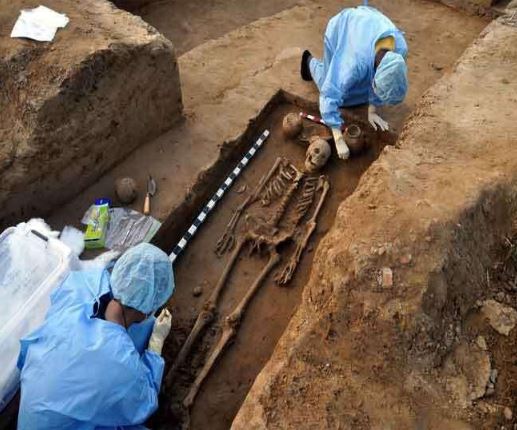
During the 2025–26 excavation season, archaeologists working at the Harappan cemetery area uncovered eight burials. The Archaeological Survey of India has now handed skeletal remains from the excavation to the Anthropological Survey of India for detailed scientific study.
The research is expected to focus on biological profiles, palaeopathology, and advanced investigations including ancient DNA analysis.
For archaeologists, this is an important new phase of research at Rakhigarhi. Instead of studying only pottery, architecture, and artefacts, researchers can investigate the actual people who lived within one of South Asia’s largest Harappan urban centres.
Eight Burials Uncovered During the 2025–26 Excavation
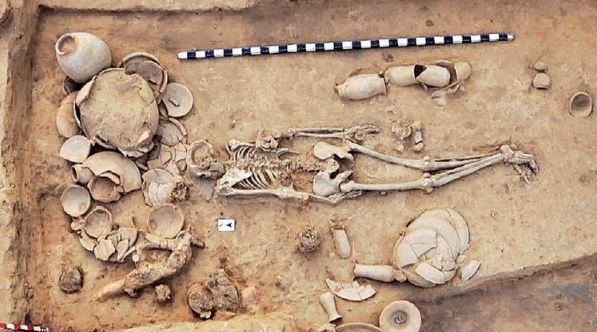
During the 2025–26 field season, archaeologists identified eight burials in the cemetery area at Rakhigarhi.
Human burials are especially valuable archaeological contexts because skeletal remains can preserve biological information about ancient populations.
Depending on preservation and laboratory results, researchers may investigate:
- Age and biological sex estimates
- Skeletal health
- Evidence of disease or physical stress
- Dietary patterns
- Population relationships
- Mortuary and burial practices
The newly recovered remains therefore offer researchers a rare opportunity to study Harappan communities through bioarchaeology.
The Skeletal Remains Enter the Laboratory
The Archaeological Survey of India has transferred the human skeletal material to the Anthropological Survey of India for advanced scientific investigation.
The official government announcement states that the transfer is expected to strengthen research capabilities, particularly in ancient DNA analysis.
The Anthropological Survey of India has also conducted palaeopathological research on skeletal remains from several archaeological sites.
This type of research can identify traces of disease, trauma, nutritional stress, and other biological conditions preserved in human bones.
What Can Ancient DNA Reveal?
Ancient DNA, often called aDNA, is genetic material recovered from ancient human or animal remains.
When sufficient authentic DNA survives, researchers may investigate biological relationships and population history.
Rakhigarhi has already played an important role in ancient DNA research.
A major 2019 scientific study attempted genome-wide analysis of skeletal remains from 61 individuals from Rakhigarhi. Only one individual produced sufficient authentic ancient DNA for detailed genomic analysis.
The difficulty of recovering DNA from ancient remains in South Asia makes every well-preserved burial scientifically important.
The newly excavated burials may provide additional opportunities for genetic research, although successful DNA recovery cannot be assumed until laboratory analysis is completed.
Studying Diet and Nutrition
Human skeletal remains can also provide clues about ancient diets.
Researchers may use methods such as isotope analysis and dental studies to investigate:
- Types of food consumed
- Nutritional stress
- Childhood health
- Changes in diet over time
- Possible differences between individuals
Such evidence could help archaeologists better understand everyday life within the Harappan city.
Rakhigarhi was a major urban settlement, but questions remain about how its population obtained food and how urban life affected health and nutrition.
Health and Disease in a Harappan City
Bones and teeth can preserve evidence of ancient health conditions.
Palaeopathologists may examine skeletal remains for signs of:
- Infectious disease
- Joint degeneration
- Physical trauma
- Dental disease
- Nutritional deficiencies
- Physiological stress
These studies can help reconstruct the lived experiences of Harappan populations.
Rather than viewing the Indus Valley Civilization only through cities, seals, pottery, and drainage systems, bioarchaeology allows researchers to examine the health of the people themselves.
Understanding Harappan Burial Customs
The cemetery at Rakhigarhi is already important for the study of Harappan mortuary practices.
Previous research has documented different forms of graves and burial treatment at the site.
The newly excavated burials may help archaeologists investigate:
- Body positioning
- Grave construction
- Associated pottery and offerings
- Differences between individual burials
- Patterns within the cemetery
Burial archaeology can provide evidence about social traditions, ritual behaviour, and attitudes toward death.
However, archaeologists must be cautious when interpreting social status or belief systems from graves alone.
Why Rakhigarhi Matters
Rakhigarhi is one of the most important Harappan archaeological sites in South Asia.
Its extensive settlement remains and cemetery areas provide researchers with an exceptional opportunity to study both urban development and human populations within the Indus Civilization.
The latest scientific investigation could contribute to major questions concerning:
Ancient DNA
What biological relationships can be identified among ancient populations?
Diet and Nutrition
What did people living at Rakhigarhi eat, and what evidence of nutritional stress survives?
Health and Disease
What illnesses or physical stresses affected Harappan communities?
Burial Practices
How were individuals treated after death?
Population History
How were the inhabitants of Rakhigarhi biologically related to other ancient populations?
A New Phase of Research at Rakhigarhi
The discovery of eight burials is only the beginning of the research process.
Excavation reveals the archaeological context.
Laboratory science can provide another layer of evidence.
Ancient DNA, palaeopathology, skeletal anthropology, and other scientific techniques may now help researchers investigate the people behind the Harappan city.
In simple terms, archaeologists have uncovered the burials.
Now scientists will begin studying the lives preserved within them.
Key Facts
📍 Location: Rakhigarhi, Hisar District, Haryana
🏺 Civilization: Indus Valley / Harappan Civilization
⛏️ Excavation Season: 2025–26
⚱️ Discovery: Eight burials in the cemetery area
🔬 Research: Skeletal anthropology, palaeopathology and potential ancient DNA analysis
🏛️ Institutions: Archaeological Survey of India and Anthropological Survey of India