
A major archaeological discovery in Tenkasi district is attracting national attention. Excavations by the Tamil Nadu State Department of Archaeology at Karivalamvandanallur Archaeological Site have uncovered significant Early Historic remains, leading some archaeologists to describe the site as a potential “next Keeladi.”
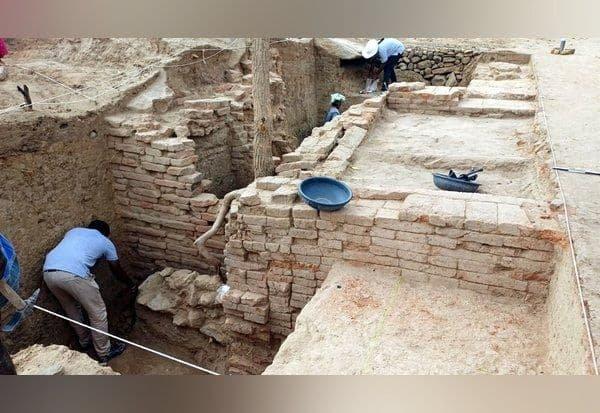
The excavation has revealed a large brick structure, a square-shaped stepwell, and structural remains dating to approximately 2,500 years ago, during the Sangam Age.
These discoveries suggest that another major urban settlement may have flourished in southern Tamil Nadu alongside other well-known archaeological centres.
What Has Been Discovered?
Excavators have documented several important features, including:
- A large Early Historic brick structure
- A square-shaped stepwell
- Brick walls and habitation remains
- Settlement layers dating to around 500 BCE–300 CE
These remains indicate a permanent and carefully planned settlement rather than a temporary habitation.
Evidence of Planned Urban Architecture
The substantial brick structures suggest organized construction techniques and planned urban development.
Researchers believe the settlement may have included:
- Residential buildings
- Public spaces
- Water management facilities
- Planned streets and activity areas
Such evidence strengthens the case for sophisticated urban planning during the Sangam Age.
The Importance of the Stepwell
One of the excavation’s most remarkable discoveries is the square-shaped stepwell.
The structure demonstrates:
- Advanced water storage techniques
- Sustainable water management
- Engineering adapted to local conditions
- Long-term settlement planning
Water infrastructure like this is an important indicator of organized urban communities.
Why Are Researchers Comparing It to Keeladi?
For more than a decade, Keeladi has been central to discussions about ancient Tamil urbanism.
The discoveries at Karivalamvandanallur share several similarities:
- Brick-built architecture
- Planned settlement layout
- Water management systems
- Sangam Age occupation
Researchers emphasize that it is too early to conclude that the site is equivalent to Keeladi, but the similarities make it one of the most exciting ongoing excavations in South India.
Academic Significance
The excavation is important because it contributes to major archaeological debates regarding:
🏛️ Early Urbanism
Evidence for planned towns during the Sangam period.
💧 Water Management
Sophisticated hydraulic engineering in ancient settlements.
🧱 Brick Architecture
Large-scale permanent construction during the Early Historic period.
🌏 Expansion Beyond Keeladi
Evidence that urban development extended across the wider Tamiraparani cultural region, rather than being limited to a single site.
Why This Discovery Matters
The discoveries at Karivalamvandanallur suggest that the story of ancient Tamil civilization is still unfolding.
Rather than representing an isolated urban centre, Keeladi may have been part of a broader network of well-planned settlements spread across southern Tamil Nadu.
As excavations continue, Karivalamvandanallur could become one of India’s most significant archaeological sites, offering fresh insights into the growth of Sangam Age society.
Key Facts
📍 Location: Karivalamvandanallur, Tenkasi District, Tamil Nadu
🏺 Age: Approximately 2,500 years
🧱 Major Discoveries: Large brick structure, square stepwell, habitation remains
🏛️ Period: Early Historic / Sangam Age
🔍 Importance: Urban planning, water management, expansion of Sangam-era settlements