
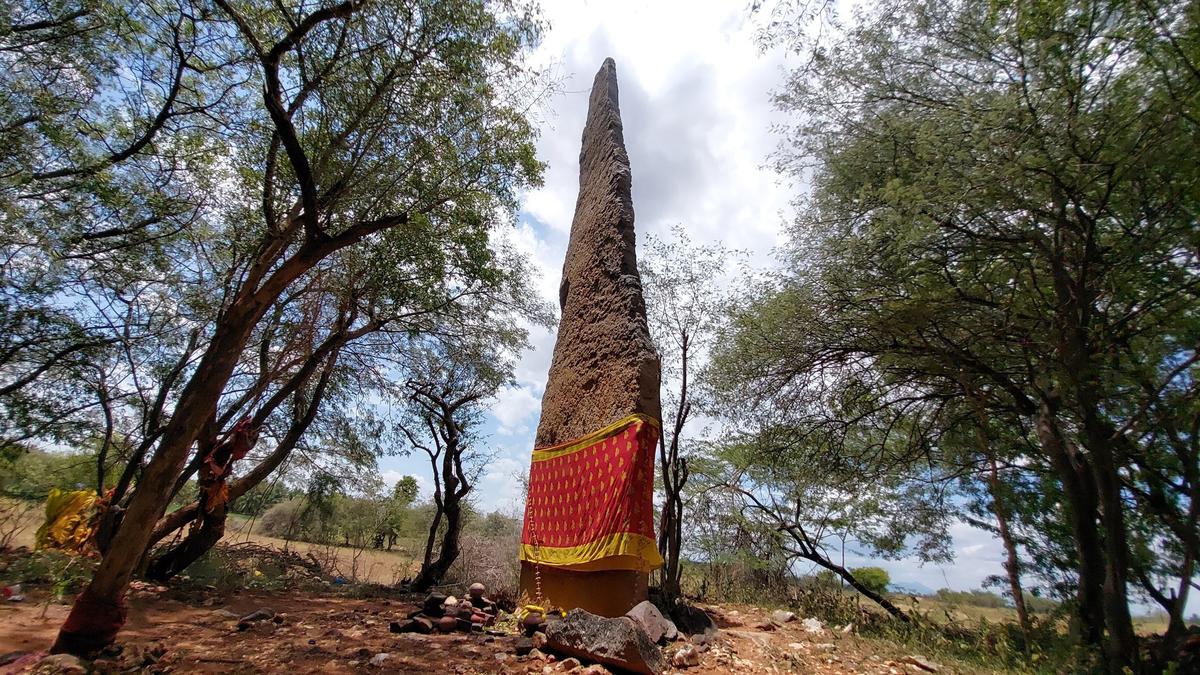
The Archaeological Survey of India has initiated excavations around a massive 26-foot-tall standing stone (menhir) at Kumarikalpalayam, located in Tamil Nadu.
This monument is believed to be one of the tallest megalithic menhirs in India, drawing renewed attention to the region’s Iron Age burial landscapes and commemorative traditions.

The Megalithic Menhir at Kumarikalpalayam
Menhirs are large upright stones erected by ancient communities, often associated with megalithic cultures of South India.
Key features of the Kumarikalpalayam menhir include:
- Height of approximately 26 feet
- Positioned prominently in an open landscape
- Likely part of a larger archaeological complex
Such monumental stones required significant planning, labor, and social organization, indicating the importance of these structures in prehistoric societies.
Megalithic Burial Traditions in South India
Megalithic sites across South India are commonly associated with the Iron Age (c. 1200 BCE – 300 BCE and later).
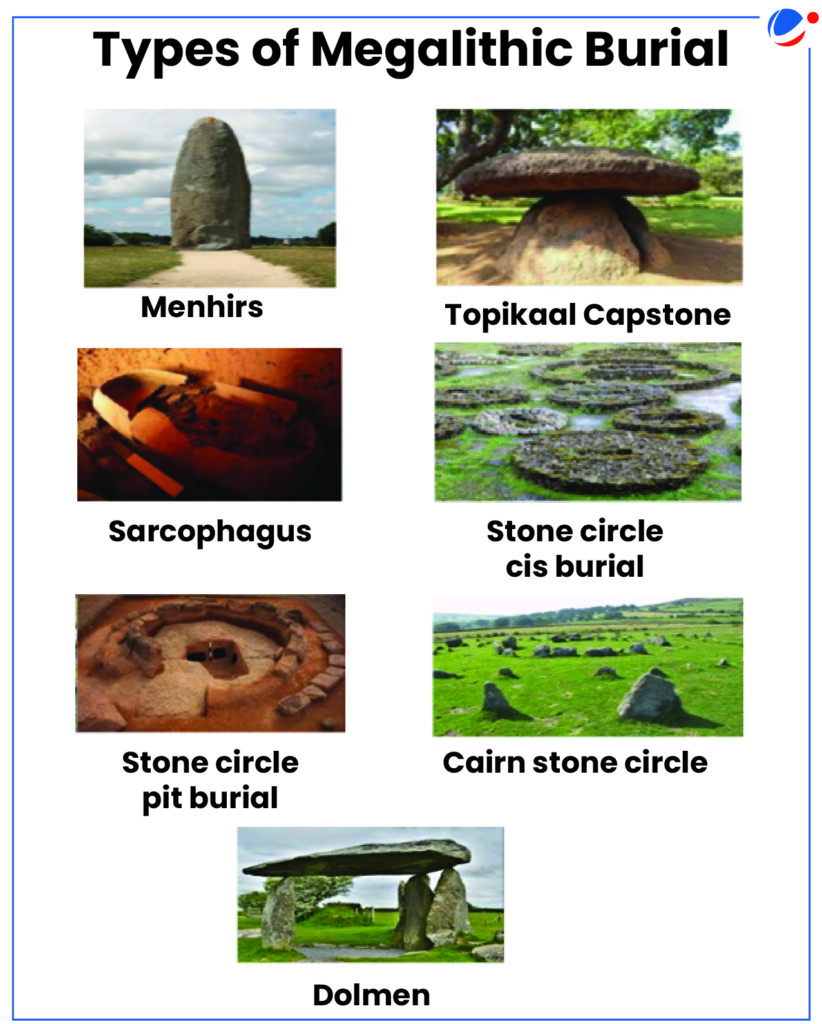
These sites often include:
- Menhirs (standing stones)
- Dolmens (stone burial chambers)
- Cairn circles and stone alignments
Archaeologists interpret these structures as:
- Markers of burial sites or memorials for the dead
- Territorial or symbolic markers
- Elements of ritual landscapes
What the Excavation May Reveal
The ongoing excavation around the menhir aims to uncover:
- Burial remains or associated structures
- Artifacts such as pottery, tools, or metal objects
- Evidence of ritual or funerary practices
These findings could help establish the chronology and cultural context of the site more precisely.
Why This Discovery Matters
The excavation at Kumarikalpalayam is significant because it may reveal:
- A previously unknown burial complex
- Insights into Iron Age funerary practices
- Evidence of how prehistoric communities marked memory and space
In simple terms, this towering stone may not just be a monument—it could be the marker of an ancient burial site from around two thousand years ago.
The excavation at Kumarikalpalayam is significant because it may reveal:
- A previously unknown burial complex
- Insights into Iron Age funerary practices
- Evidence of how prehistoric communities marked memory and space
In simple terms, this towering stone may not just be a monument—it could be the marker of an ancient burial site from around two thousand years ago.