
A remarkable archaeological archive has been reopened at Banaras Hindu University (BHU) in Varanasi.
On 20 August 2026, university authorities opened 22 boxes that had remained unopened for nearly seven decades. The material inside had originally been recovered during the 1957 excavation at Rajghat, one of the most important archaeological sites associated with ancient Varanasi.
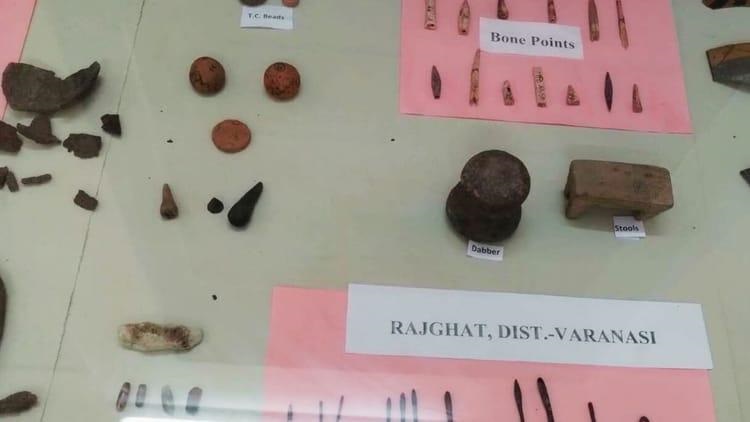
The boxes reportedly contained more than 10,000 archaeological artefacts, including pottery, sculptures, coins, tools, stamp seals, and objects made from copper, ivory and bone. They also contained a substantial photographic archive documenting archaeological sites and sculptures across India.
This is not a new excavation.
It is the recovery and reopening of an archaeological archive created by an excavation nearly 70 years ago.
🏛️ Rajghat: The Archaeological Context
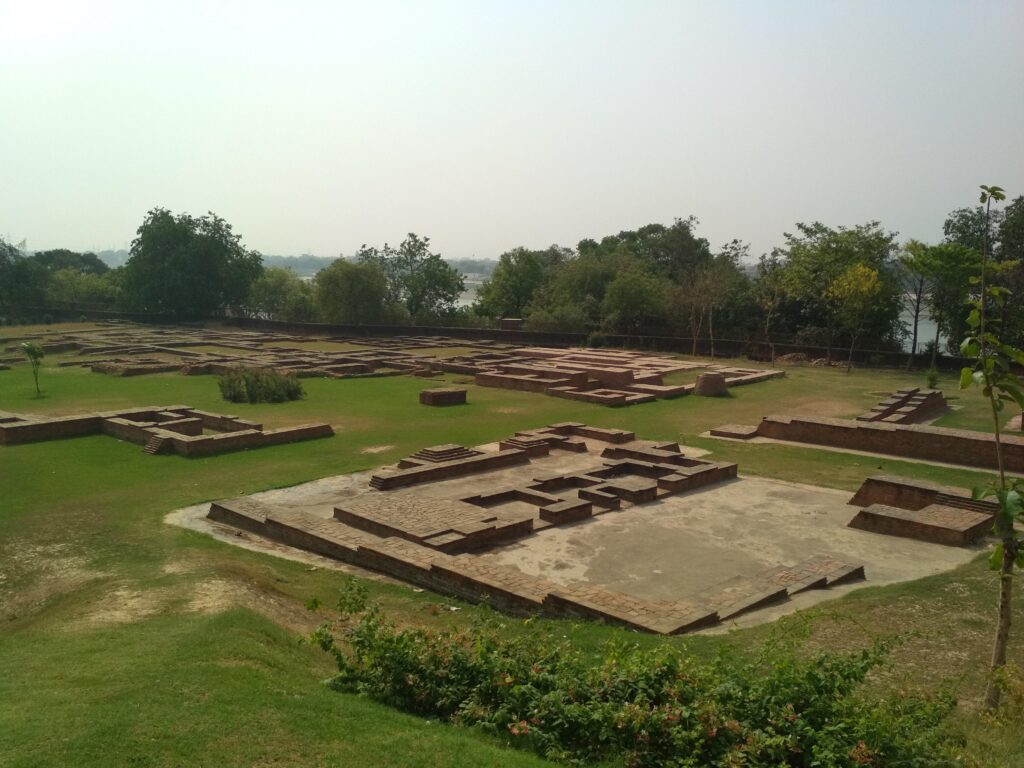
Rajghat lies in the Varanasi region of the Middle Ganga Valley and has long been recognized as an important archaeological settlement.
The 1957–58 Indian Archaeology: A Review records excavation work at Rajghat and illustrates exposed structural remains belonging to different archaeological periods.
The excavations were conducted by the Department of Ancient Indian History, Culture and Archaeology at BHU, with A. K. Narain and T. N. Roy associated with the Rajghat excavation programme. The resulting excavation publications later documented the site’s stratification, structures and small finds.
📦 What Was Inside the 22 Boxes?
According to the recent report, the collection contains more than 10,000 artefacts.
The material includes:
- 🏺 Pottery
- 🗿 Sculptures
- 🪙 Ancient coins
- 🔖 Stamp seals
- 🛠️ Tools
- 🟤 Copper objects
- 🦴 Bone objects
- 🐘 Ivory objects
Researchers also reported finding several seals carrying inscriptions, including examples in Brahmi script. These will now be examined by specialists in epigraphy
🏺 Nearly 3,000-Year-Old Painted Pottery
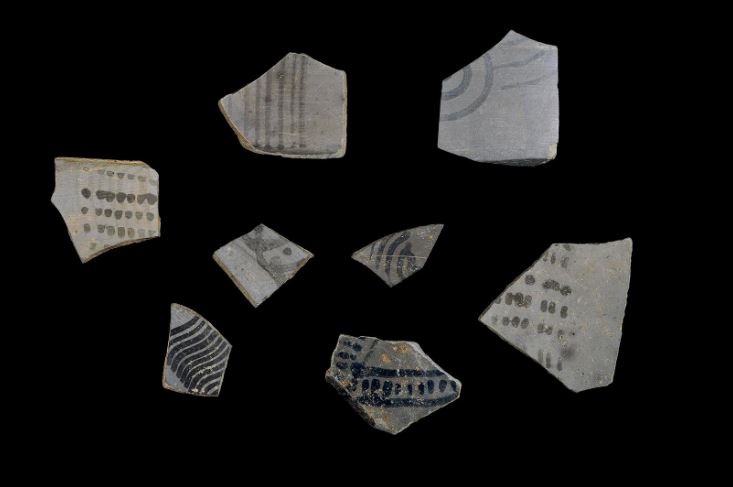
Among the material is painted black pottery reported to be nearly 3,000 years old.
Pottery is particularly important in archaeological research because changes in ceramic technology, form and decoration can help researchers establish cultural sequences and compare settlements.
The Rajghat collection therefore provides an opportunity to revisit material excavated decades ago using today’s comparative archaeological frameworks.
Importantly, the reported age should be understood as part of the current description of the collection—not as a new 2026 scientific dating result.
📸 A Forgotten Photographic Archive
Perhaps the most unusual part of the collection is the photographic archive.
The boxes reportedly contain around:
3,000 glass slides
and
5,000+ photographic negatives.
The photographs document archaeological sites and sculptures from different parts of India, including Rajghat, Manjhi, Ratnagiri, Ajanta and Ellora.
Some photographs reportedly preserve views of sculptures associated with Vishnu, Shiva and Buddha.
These images have value beyond historical curiosity. They can provide researchers with a record of monuments and sculptures before later restoration, weathering, urban development and other changes.
🔍 Why Reopen an Excavation From 1957?
Archaeological interpretation does not remain fixed.
When the Rajghat excavation was conducted in the 1950s, researchers had access to far fewer scientific techniques than archaeologists have today.
The newly recovered material can now be:
- Re-catalogued
- Conserved
- Digitally documented
- Compared with newer archaeological discoveries
- Re-examined through modern analytical techniques
- Studied alongside later excavations from the Ganga Valley
This makes the project a form of archaeological archival recovery.
🧱 The Original Rajghat Excavation
The archaeological archive is supported by a substantial body of earlier research.
BHU later published Excavations at Rājghāt, 1957–1958, 1960–1965, documenting the site’s cuttings, stratification and structures. A separate volume covered the small finds, including beads, pottery and other artefacts.
The original excavation therefore generated not only artefacts, but also a long-term archaeological record that researchers can now connect with the material being reopened.
📜 What Could the Collection Tell Researchers?
The reopened collection could contribute to several areas of archaeological research.
🏺 Pottery Chronology
Researchers can compare older Rajghat ceramics with material from newer excavations to refine cultural sequences in the Ganga Valley.
🔖 Epigraphy
Inscribed seals can provide evidence for writing, administration, trade and other aspects of ancient society.
🪙 Economy and Trade
Coins, seals, beads and manufactured objects can contribute to studies of exchange and economic activity.
🏛️ Urban Development
The archaeological material can be examined alongside Rajghat’s structural remains to better understand settlement growth.
📸 Historical Documentation
The old photographs provide a visual record of archaeological sites and sculptures that can be compared with their present condition.
🏺 Why Rajghat Matters for Ancient Varanasi
Rajghat is particularly important because it provides archaeological evidence for the long history of settlement in the Varanasi region.
Rather than relying exclusively on literary traditions, archaeology allows researchers to investigate the physical remains of ancient communities.
The site’s structures, pottery, artefacts, inscriptions and other archaeological evidence can collectively contribute to reconstructing the development of settlement and urban life in the Middle Ganga Valley.
🧠 This Is an Archaeological “Rediscovery”
There is an important distinction here.
The artefacts were not excavated in 2026.
They were recovered during archaeological work beginning in 1957 and subsequently preserved at BHU.
What happened in August 2026 was that the university reopened material that had remained sealed for nearly 70 years and began the process of conservation, documentation and renewed research.
So this story is best described as an archaeological archive being rediscovered, rather than a new excavation.
🔬 Why This Could Become Important
The immediate discovery is impressive: 22 boxes and more than 10,000 archaeological objects.
But the long-term significance could be greater.
If the artefacts, inscriptions, photographs and excavation records are systematically studied and digitised, researchers may be able to connect the old Rajghat excavation with decades of subsequent archaeological research.
That could help refine our understanding of:
- Ancient Varanasi
- The Middle Ganga Valley
- Early urbanisation
- Pottery traditions
- Trade and exchange
- Ancient writing
- Sculpture and religious traditions
The Bigger Archaeological Lesson
The Rajghat story demonstrates that archaeological discoveries do not always come from a new trench.
Sometimes, the evidence has already been excavated—but remains inaccessible in an archive, museum store or university collection.
In this case, an excavation from 1957 has effectively returned to active research in 2026.
The archaeologists of the 1950s recovered the material.
The researchers of today now have the opportunity to ask new questions of it.
The excavation is nearly 70 years old.
The research is beginning again.
Key Facts
📍 Site: Rajghat, Varanasi, Uttar Pradesh
🏛️ Institution: Banaras Hindu University
⛏️ Original Excavation: 1957
📦 Boxes Reopened: 22
🏺 Artefacts: 10,000+
📸 Glass Slides: ~3,000
🎞️ Photographic Negatives: 5,000+
📜 Notable Material: Pottery, sculptures, coins, tools, seals and objects of copper, ivory and bone
🔬 Current Work: Conservation, documentation and renewed research
Sources
The recent reopening and contents of the collection are reported by The Indian Express.
The original archaeological record is preserved through the National Mission on Monuments and Antiquities’ Indian Archaeology: A Review, including the 1957–58 report documenting Rajghat’s excavated structures.
BHU’s published excavation volumes, Excavations at Rājghāt, 1957–1958, 1960–1965, provide the longer archaeological record of the excavation and its small finds.