
Mayong in Morigaon district, Assam, is widely known in popular culture for its associations with tantra, magic and traditional healing. But archaeological research is revealing another side of the region—one connected to long-term settlement, religious activity, sculpture and craft traditions.
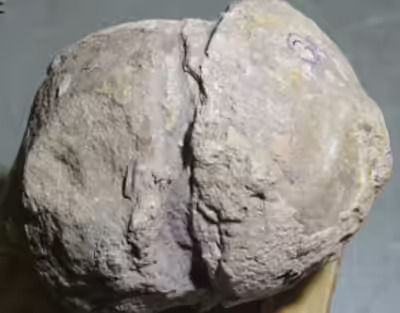
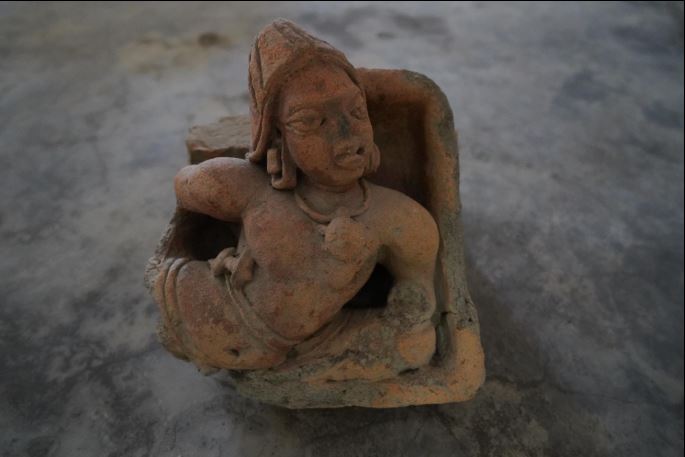
In August 2026, two unfinished stone sculptures believed to date to the 7th–8th centuries CE, along with a later terracotta figure, were reported from the Kachshila Shiva Ashram at Hatimuriya village in Mayong. The objects came to light when earth was being removed for construction near the shrine. Ancient brick fragments were also observed in the area.
The newly recovered objects were subsequently moved to the Mayong Village Museum and Research Centre for safekeeping and further study.
This discovery is important not because it proves a single large ancient settlement, but because it adds another piece to an already rich archaeological landscape in the Kalang–Kapili Valley.
🗿 What Was Found at Mayong?
The recent discovery consists of three principal objects:
- Two unfinished stone sculptures, provisionally dated to the 7th–8th centuries CE
- One terracotta figure, tentatively dated to the 12th–13th centuries CE
- Associated ancient brick fragments found in the excavated soil
The stone pieces are particularly significant because their unfinished state can provide information about sculptural production and craftsmanship, rather than only religious iconography.
The precise identification and function of the sculptures should, however, remain subject to further specialist study.
A Site Connected With Shaivite Tradition
The artefacts were found at the Kachshila Shiva Ashram, described in recent reporting as a historically significant Shaivite site.
Their discovery therefore raises interesting questions about the development of religious landscapes in early medieval Assam.
However, the presence of sculptures near a modern shrine does not by itself establish the exact nature or date of an earlier temple. Archaeologists need archaeological context, stratigraphy and comparative study to establish those relationships.
Ancient Bricks Add Another Clue
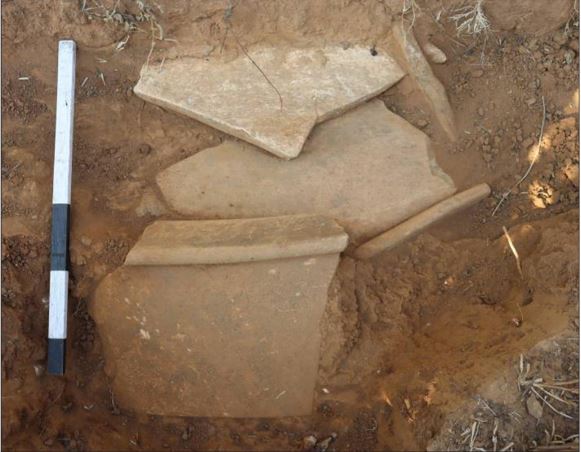
Ancient brick fragments were also noticed when the ground was disturbed for construction.
This is significant because archaeological research has already documented brick and terracotta architectural material, pottery deposits and archaeological mounds at several locations around Mayong.
A systematic archaeological survey published in Ancient Asia documented a remarkably diverse archaeological landscape in the region, including rock-cut sculptures, temple remains, pottery, brick and terracotta architectural pieces, inscriptions, water tanks and other remains.
The new discovery therefore fits into a much larger archaeological picture rather than standing completely alone.
Mayong’s Archaeological Landscape
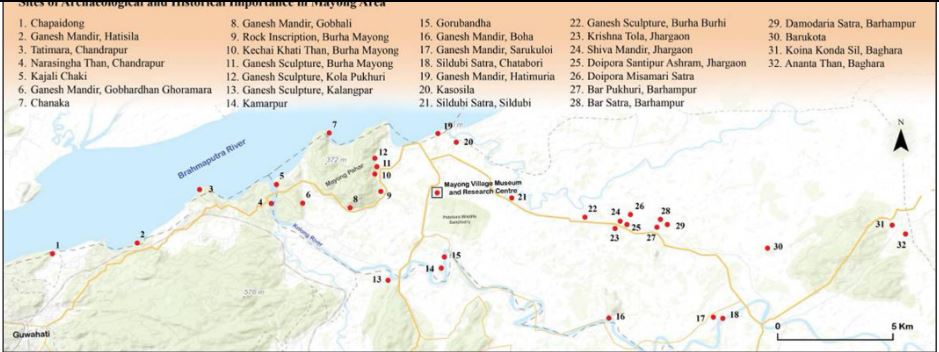
A 2022 archaeological study based on field surveys conducted during 2020–21 documented numerous archaeological remains across Mayong and the surrounding Kalang–Kapili Valley.
Researchers recorded:
- Neolithic stone tools
- Early and late medieval rock-cut sculptures
- Temple ruins
- Pala-Sena-period sculptures
- Archaeological mounds
- Pottery deposits
- Brick and terracotta architectural fragments
- Metal objects
- Inscriptions and engravings
- Water tanks
- Manuscripts
- Bronze and bell-metal sculptures
- Vaishnavite institutions and sacred places
This makes Mayong an important archaeological landscape rather than simply a location associated with folklore.
The Mayong Village Museum
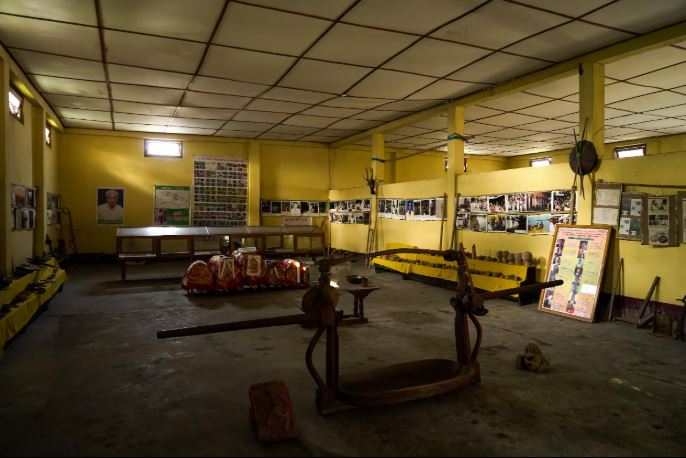
The Mayong Village Museum and Research Centre has played an important role in preserving archaeological and ethnographic material from the region.
The published archaeological survey notes that the museum houses objects including stone tools, terracotta objects, pottery, sculptures and other cultural materials collected from the surrounding area.
The newly recovered sculptures were also moved to the museum for safekeeping, providing protection while their archaeological significance can be assessed.
Evidence for Regional Artistic Traditions
The concentration of sculptures and architectural fragments in the Mayong region offers an opportunity to investigate regional artistic traditions of the Brahmaputra Valley.
The earlier archaeological survey concluded that the sculptural traditions and temple remains of Mayong can be understood within the wider cultural development of the Brahmaputra Valley during the early medieval period.
The newly found unfinished sculptures may eventually contribute to this discussion—particularly if their stone type, iconography, workmanship and archaeological context can be established.
Why Northeast India Matters
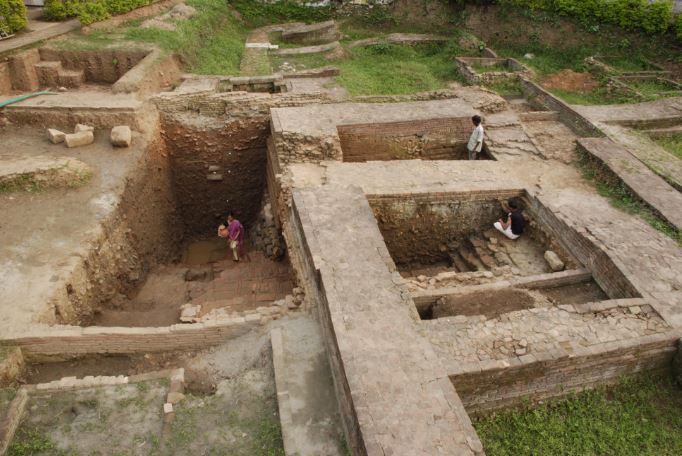
For a long time, popular discussions of ancient Indian history have concentrated heavily on archaeological centres in northern, western and southern India.
The Northeast has a much more complex archaeological record than its representation in mainstream narratives might suggest.
Sites and landscapes across Assam and the wider Northeast preserve evidence of:
- Religious traditions
- Regional art styles
- Settlement development
- Craft production
- Long-distance cultural interaction
- Indigenous cultural continuity
Mayong provides an excellent example of why these regions deserve sustained archaeological documentation.
What Still Needs to Be Investigated?
The recent discovery is exciting, but several questions remain open.
Researchers will need to determine:
Who created the stone sculptures?
What religious or architectural context did they belong to?
Were they produced locally or brought from another centre?
What is the exact date of the associated brick remains?
Is there an earlier structural complex beneath or around the present shrine?
How do the sculptures relate to other early medieval art traditions in Assam?
These questions cannot be answered from the objects alone. Archaeological context and specialist analysis will be crucial.
Beyond the “Land of Magic”
Mayong’s popular identity is strongly associated with magic, tantra and folklore.
But archaeology reveals a considerably broader history.
The region preserves evidence of religious activity, settlement, craft production, artistic traditions and material culture extending across different periods. The 2022 archaeological survey even identified evidence ranging from possible Neolithic occupation to medieval and later cultural traditions.
The new sculptures add another layer to this long history.
Why This Discovery Matters
The Mayong discoveries are significant because they contribute to a growing body of archaeological evidence from Assam.
They can potentially help researchers understand:
🛕 Religious Landscapes
How Shaivite and other religious traditions developed in the Brahmaputra Valley.
🎨 Artistic Traditions
How regional sculptural styles developed and interacted with wider South Asian traditions.
🏘️ Settlement History
How communities occupied and transformed the Mayong landscape over time.
🧱 Architectural History
Whether scattered brick and terracotta remains represent earlier structures or temple complexes.
🌏 Northeast Indian Archaeology
Why the archaeological record of Assam deserves a more prominent place in discussions of Indian history.
📌 Key Facts
📍 Location: Hatimuriya, Mayong, Morigaon district, Assam
🗿 Recent discovery: Two unfinished stone sculptures
📅 Tentative date: 7th–8th century CE
🏺 Additional find: Terracotta figure, tentatively dated to the 12th–13th century CE
🧱 Associated evidence: Ancient brick fragments
🏛️ Preservation: Mayong Village Museum and Research Centre
🔎 Broader significance: Early medieval religious and artistic landscape of the Brahmaputra Valley
The Bigger Picture
The latest discovery at Mayong is not an isolated archaeological event.
It adds to a much larger body of evidence already documented across the Kalang–Kapili Valley, where researchers have recorded sculptures, pottery, terracotta, architectural remains, inscriptions, water structures and other traces of past communities.
For archaeology, the most important question is therefore not simply “What was found?”
It is:
“What does this object tell us about the landscape and people that produced it?”
Mayong may have been known for centuries through stories of magic and tantra. Archaeology is now revealing another story—one written in stone, brick, terracotta and the remains of ancient settlements.
📚 Sources
Archaeological survey of Mayong and the Kalang–Kapili Valley, published in Ancient Asia — documenting the region’s diverse archaeological remains.
Recent reporting on the 2026 discovery at Kachshila Shiva Ashram, including the two 7th–8th-century stone sculptures and later terracotta figure.
Directorate of Archaeology, Government of Assam — official information on archaeological exploration and protected sites in Assam