
A recently documented inscription from Enapuram Pudhupatti Kanmai near Sivaganga, Tamil Nadu, adds an important piece to the epigraphic record of the Vanathirayar chiefs.
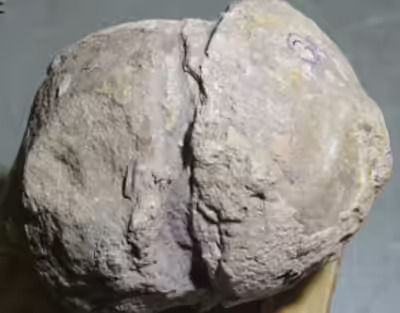
The inscription was brought to researchers’ attention by a local college student and was subsequently examined by heritage researchers and a history scholar. It is carved on a stone approximately 4 feet long and 1 foot wide, with 19 lines of Tamil inscription spread across two faces. Researchers have identified it as a 16th-century record.
What makes the inscription particularly significant is its reference to Deiva Maavali Vanathirayar and a land grant.
Where Was the Inscription Found?
The inscription was identified at Enapuram Pudhupatti Kanmai, near Sivaganga.
Its discovery began with a local observation: a college student, Muralikrishnan, noticed the inscribed stone and informed researchers. A subsequent field investigation was carried out by Pulavar K. Kaalirasa of the Sivaganga Heritage Walk Group and Dr. Velayudharaja of Alagappa Government Arts College, Karaikudi.
This is a useful reminder that archaeological and epigraphic discoveries do not always emerge from large excavations. Landscape surveys and local knowledge can bring previously undocumented monuments and inscriptions to scholarly attention.
A 16th-Century Tamil Inscription
The inscription is carved on a stone measuring approximately:
- 4 feet in length
- 1 foot in width
- 19 lines of Tamil text
- Writing appears on both faces
Researchers have dated it to the 16th century, based on the inscription’s script and palaeographic characteristics.
However, the exact historical attribution requires some caution.
Researchers suggest that it may belong to Irandhakaalam Edutha Sundara Tholudaiyan Maavali Vanathirayan, who is reported to have ruled between approximately 1515 and 1533 CE. Another possibility is that a later descendant issued the inscription to reaffirm or protect an earlier charitable grant.
So, for the blog and future reel, it is better to say “16th-century inscription associated with the Vanathirayars” rather than presenting the individual ruler attribution as absolutely settled.
What Does the Inscription Record?
The inscription records a land grant made by Deiva Maavali Vanathirayar.
This is significant because land grants recorded in inscriptions can preserve details about:
land → donors → beneficiaries → religious institutions → obligations → political authority
In this case, researchers believe the grant was probably connected with a Shiva temple that once existed in the area. A stone bearing a trident (Soolam) was found nearby, providing an important clue, although the temple itself does not survive.
This interpretation should therefore be treated as probable rather than proven.
The Symbols on the Stone
The inscription is not simply a block of written text.
The reverse face also contains engraved symbols identified by researchers as:
- Kamandalam — a water vessel
- Whip
- Tridanda — a three-pronged ascetic staff
These symbols may provide additional clues about the religious context of the grant and the institution with which it was associated.
The nearby trident stone is another important piece of contextual evidence.
Together, these physical features allow researchers to investigate not only what the inscription says, but also the religious and institutional landscape in which it was created.
A Medieval Warning Against Violating the Grant
One particularly interesting feature is the inscription’s protective clause.
It warns that anyone who interferes with or damages the charitable endowment would incur a serious religious sin — described in the inscription through the traditional comparison with killing a sacred cow on the banks of the Ganga.
Such protective formulae are known in Tamil epigraphy as Ombadai Kilavi.
They were used to reinforce the sanctity of donations and discourage later interference with endowed land or property.
In practical terms, an inscription could therefore function almost like a permanent public legal-religious notice.
Who Were the Vanathirayars?
The Vanathirayars were regional chiefs who operated within the changing political landscape of southern Tamil Nadu.
Researchers associate them with the political world of:
- Later Pandyas
- Vijayanagara Empire
- Nayak rulers
The Vanathirayars used the title Maavali Vanathirayar and were associated with areas around Madurai, Azhagar Kovil, Kalaiyarkovil and Manamadurai during the medieval and early modern periods.
Their historical importance comes partly from their position between larger imperial and regional political structures.
They could act as local rulers, chiefs, administrators and patrons of religious institutions.
Why Inscriptions Are So Important
Archaeological remains can tell us that a settlement existed.
An inscription can sometimes tell us who controlled land, who made a donation, which religious institution received it and what political authority stood behind the transaction.
That makes epigraphy particularly valuable for reconstructing medieval political history.
A single inscription can potentially connect:
Ruler → Land → Institution → Local Community → Political Authority
This is information that pottery, architecture or artefact assemblages alone may not preserve.
Why This Inscription Matters
The researchers report that this is the only inscription identified so far that specifically mentions “Deiva Maavali Vanathirayar.”
That makes the record particularly useful for expanding the known epigraphic evidence for the Vanathirayar lineage.
It can potentially contribute to research on:
Political history
How regional chiefs operated within the larger Pandya, Vijayanagara and Nayak political systems.
Land administration
How land was transferred, endowed and protected.
Religious institutions
How temples and charitable establishments received royal or chiefly patronage.
Local networks
How political authority connected with villages, landowners and religious institutions.
Historical geography
How medieval political and religious landscapes were organised across the Sivaganga–Madurai region.
An Inscription Is More Than an Old Stone
The real significance of the discovery is not simply its age.
A 500-year-old inscription becomes historically valuable when its text, script, location, symbols and archaeological context can be brought together.
In this case, researchers are examining all of these elements:
16th-century script + land grant + Vanathirayar name + religious symbols + nearby trident stone + local landscape
Together, they provide a much richer picture of southern Tamil Nadu during the 15th–16th centuries.
Conclusion
The newly documented inscription at Enapuram Pudhupatti Kanmai near Sivaganga adds another piece to the complicated political history of medieval and early modern Tamil Nadu.
Its reference to Deiva Maavali Vanathirayar, its record of a land grant and its associated religious symbols make it particularly valuable for studying the Vanathirayar chiefs and their relationship with religious institutions and local land administration.
And there is an important lesson here for archaeology:
Sometimes history is not buried beneath an excavation trench. Sometimes it is standing in the landscape, waiting to be read.
Key Facts
| Feature | Details |
|---|---|
| Location | Enapuram Pudhupatti Kanmai, near Sivaganga |
| Period | 16th century CE |
| Inscription | Tamil |
| Length of stone | Approx. 4 feet |
| Width | Approx. 1 foot |
| Text | 19 lines across two faces |
| Associated rulers | Vanathirayar lineage |
| Named figure | Deiva Maavali Vanathirayar |
| Content | Land/charitable grant |
| Possible institution | Shiva temple, based on contextual evidence |
| Other symbols | Kamandalam, whip, Tridanda |
| Nearby evidence | Trident/Soolam stone |
The current report also notes that the precise attribution to a particular Vanathirayar ruler remains a matter of interpretation, so the 16th-century dating and Vanathirayar association should be separated from the more specific ruler attribution.
Sources
The South First — Tamil Nadu’s latest archaeological discoveries
Tamil Nadu Department of Archaeology — Inscriptions of Tamil Nadu
Udhayam Inscription Database — Sivaganga inscriptions
New Indian Express — Earlier 16th–17th-century inscription from Sivaganga