

adminEdit Profile
A black-and-red ware bowl discovered near Salem carries five undeciphered graffiti symbols. Alongside Iron Age weapons and burial remains, the find raises important questions about communication, technology and cultural life in prehistoric South India.
Introduction
How did people in South India record information more than 3,000 years ago? An archaeological discovery at Thelunganur, near Salem in Tamil Nadu, has brought this question into focus.
Reported on 9 October 2026, the discovery involves an intact black-and-red ware bowl bearing a sequence of five graffiti symbols. The excavation was conducted by the Tamil Nadu Department of Archaeology in the water-spread area of the Mettur Dam.
The bowl is significant because the symbols appear in a deliberate sequence. Archaeologists are investigating whether these marks represent a form of early communication or a system that may eventually help researchers understand the development of writing in South India.
However, the symbols have not yet been deciphered, and their precise meaning remains unknown. The discovery is an important research lead, not proof that a new writing system has already been decoded.
1. Where Was the Discovery Made?
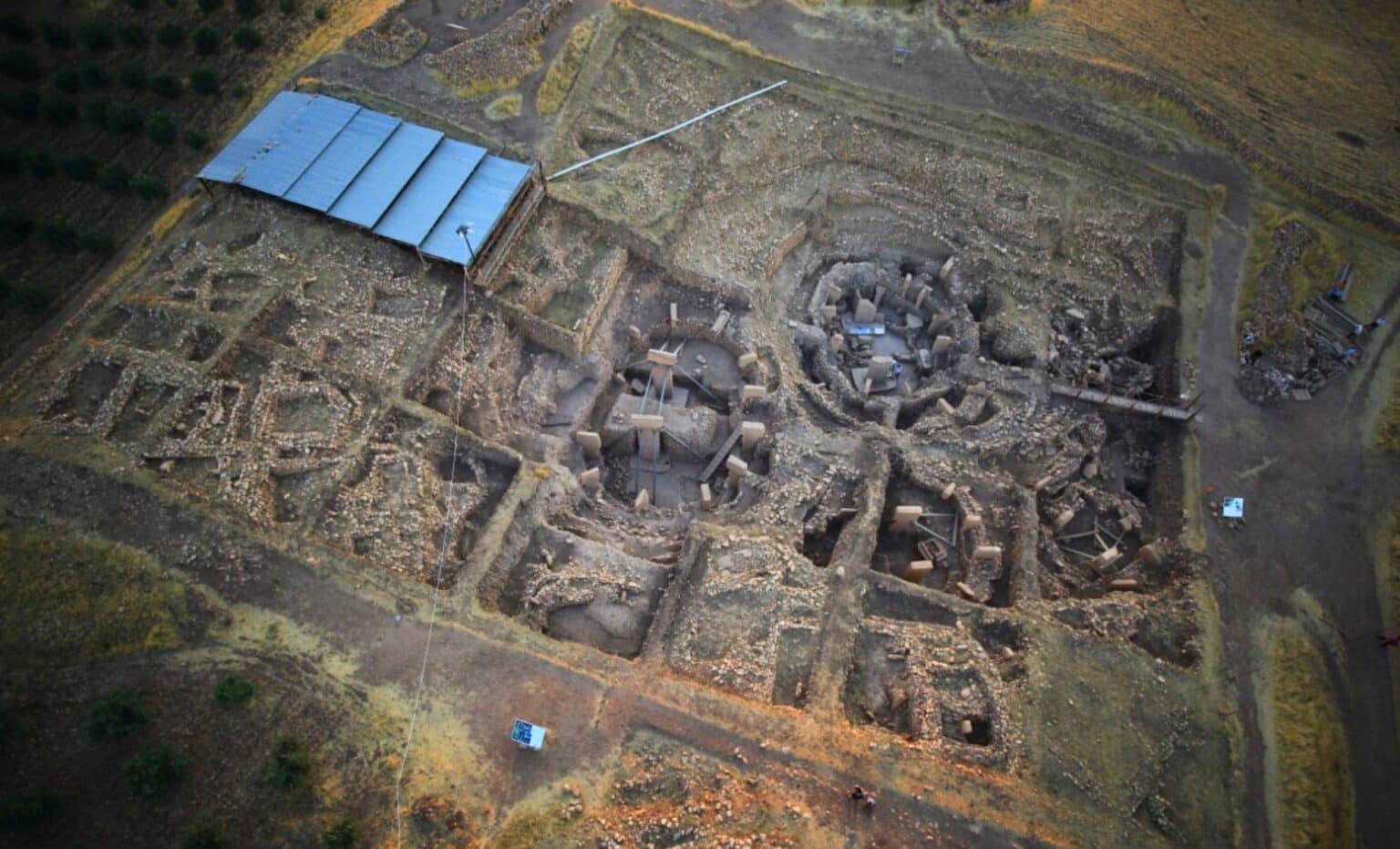
Thelunganur is an archaeological site in the Mettur region of Salem district, Tamil Nadu. It belongs to a wider landscape associated with Iron Age settlements and megalithic burial practices.
The nearby site of Mangadu is also important for understanding the region’s prehistoric past. Reported archaeological dating places both sites broadly between 1600 BCE and 1200 BCE.
This period witnessed the development of distinctive ceramic traditions, iron technology and complex burial practices across parts of the Indian subcontinent.
The location of the excavation in the Mettur Dam’s water-spread area also places the site within a landscape shaped by modern water infrastructure. Archaeological investigations here help document remains that might otherwise receive limited attention.
2. The Bowl with Five Graffiti Symbols
The principal discovery is an intact bowl made of black-and-red ware, a ceramic tradition widely represented at archaeological sites across India.
The vessel carries five graffiti symbols arranged from left to right. According to published reporting, this is the longest sequence of such marks recorded in Tamil Nadu.
An additional detail makes the discovery especially interesting: another bowl reportedly carries the same five symbols, but in a different order.
This raises several questions for researchers:
- Were the marks intended to communicate information?
- Did the symbols represent objects, ideas, people or activities?
- Did the order of the marks change their meaning?
- Were the symbols shared conventions understood by a particular community?
These questions cannot yet be answered from the reported evidence alone. Researchers must examine the symbols’ shapes, placement, manufacturing context and relationship to other examples before proposing a reliable interpretation.
Repeated symbols and sequences can be archaeologically meaningful, but repetition by itself does not establish that a marking system was a fully developed script.
3. Do the Symbols Represent an Early Writing System?
The discovery has attracted attention because it may contribute to research into the origins of writing and symbolic communication in South India.
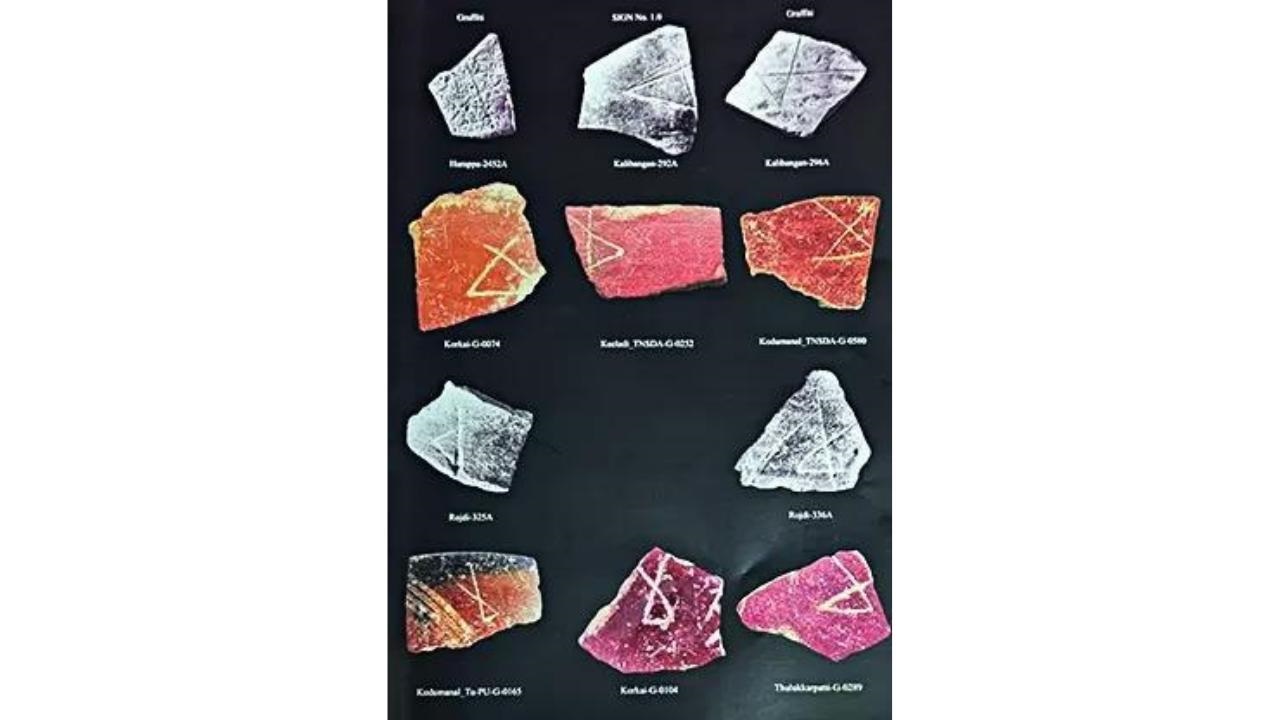
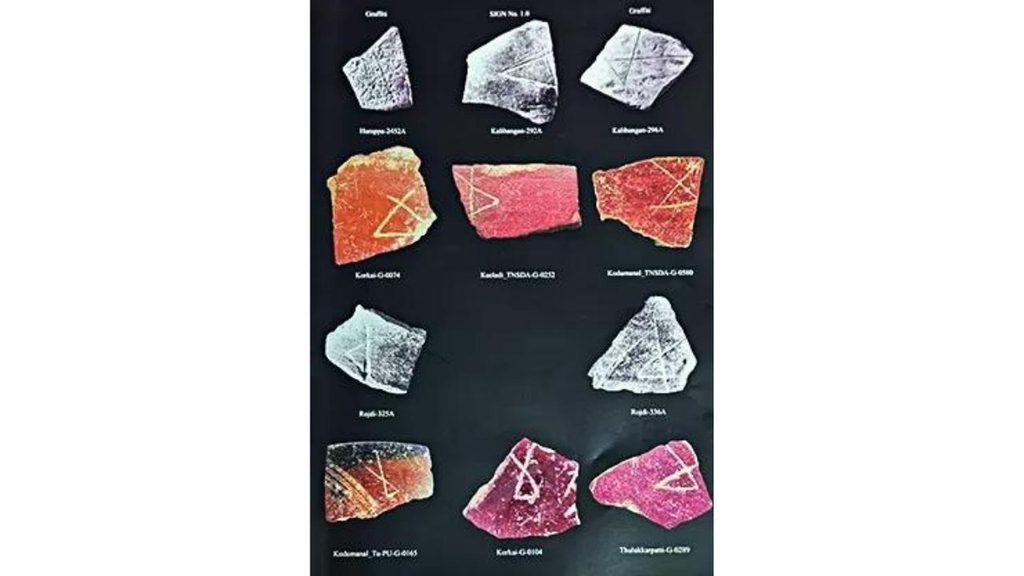
Archaeologists have documented graffiti marks on pottery at numerous sites in Tamil Nadu. These marks include geometric shapes and other recurring signs, sometimes appearing individually and sometimes in combinations.
The Tamil Nadu Department of Archaeology’s published material on Keeladi notes that graffiti marks remain undeciphered. It also discusses their importance for understanding symbolic communication during the Iron Age and related cultural periods.
The Thelunganur bowl may add valuable evidence to this wider body of material because its five symbols appear together in a single sequence.
Nevertheless, there is an important distinction between symbolic marking, a conventional sign system and a decipherable writing system. Archaeologists need sufficient contextual and comparative evidence to establish where a particular set of marks belongs along that spectrum.
For now, the most accurate description is a bowl bearing five undeciphered graffiti symbols that may provide clues about early communication.
4. Is There a Connection with the Indus Script?
One of the most discussed questions is whether South Indian graffiti marks share a historical relationship with the signs associated with the Indus Civilization.
The Indus script, associated with the Indus Civilization of the third and early second millennia BCE, remains undeciphered. Researchers have compared its signs with graffiti marks found on pottery at archaeological sites in South India.
Some studies have proposed similarities between the shapes and forms of certain signs. Such comparisons are relevant to archaeological research, but they do not independently demonstrate that the signs had the same meanings or descended from the same writing system.
To establish a historical relationship, researchers would need to consider factors including chronology, the distribution of signs, repeated combinations, archaeological context and possible pathways of cultural transmission.
The Thelunganur discovery offers another set of material for such comparisons. It does not, by itself, prove a direct connection with the Indus script.
5. What About Tamil-Brahmi?
Tamil-Brahmi, also known as Tamili in scholarly discussions, is an early script used to write Tamil. Its inscriptions provide direct evidence of written language in ancient Tamil society.
The newly reported bowl has prompted questions about whether graffiti traditions might help explain the background to the emergence of Tamil-Brahmi.
This is a legitimate research question, but the distinction between the two forms of evidence is essential.
Graffiti marks are often undeciphered and may have served different purposes. Tamil-Brahmi inscriptions, by contrast, contain identifiable characters that can be studied as part of a writing system.
A chronological gap between earlier graffiti traditions and the earliest Tamil-Brahmi evidence does not automatically prove that one evolved directly into the other.
Establishing such a relationship requires a stronger body of evidence than visual resemblance alone. The Thelunganur symbols should therefore be treated as potential evidence for further investigation rather than a confirmed precursor to Tamil-Brahmi.
6. Iron Weapons and Evidence of Metalworking
The bowl was not the only important find reported from Thelunganur. Excavations also yielded iron weapons and implements, copper objects and a possible steel sword.
Reported objects include a spear approximately 1.9 metres long, along with arrowheads, axes, swords, daggers, knives and iron nails.
These finds provide an opportunity to investigate the technological capabilities of the people associated with the site.
Iron objects can reveal information about manufacturing methods, weapon forms, tool use and the organisation of production. Metallurgical analysis can also help determine the composition of an artefact and the techniques used to produce it.
The possible steel sword is particularly noteworthy, but its composition and manufacturing history should be discussed in accordance with the available archaeological and scientific analyses.
The reported evidence points to an important technological dimension of the site’s Iron Age occupation. More detailed study is needed to establish precisely how the objects were manufactured, used and dated.
7. Four Types of Burial at Thelunganur
The excavation has also drawn attention to the variety of burial practices identified at the site.
Four forms have been reported:
Pit burial: The deceased was placed in a pit dug into the ground.
Cist burial: The burial chamber was constructed using stone slabs.
Urn burial: Human remains were placed in a large ceramic vessel.
Sarcophagus burial: The remains were placed in a coffin-like container, often made of terracotta in South Indian archaeological contexts.
These burial forms are important because they help researchers examine how communities treated their dead and organised funerary practices.
The presence of different burial types at one site does not automatically mean that they belonged to separate social groups or represented different periods. Their chronology, construction, associated objects and skeletal evidence must be examined before such conclusions can be drawn.
Published reporting also mentions the discovery of complete skeletal remains belonging to two individuals. Scientific examination may help researchers investigate aspects of health, age, burial treatment and the biological characteristics of the individuals, subject to the preservation and quality of the remains.
8. Why the Thelunganur Discovery Matters
The importance of Thelunganur lies in the combination of evidence reported from the site.
The five-symbol bowl provides material for studying early symbolic communication. The iron objects offer evidence for technological practices. The burial remains and varied funerary structures provide a basis for investigating mortuary traditions and social life.
Together, these finds can help researchers build a more detailed picture of Iron Age communities in Tamil Nadu.
The discovery also highlights the need to study graffiti-bearing pottery systematically across archaeological sites. Comparing signs from securely dated contexts may help establish whether particular marks were widely shared, locally distinctive or used in specific settings.
Future work could include detailed recording of each symbol, comparisons with published graffiti collections, examination of the bowl’s archaeological context and scientific analysis of associated materials.
Such research is essential before the symbols’ purpose or historical relationships can be established.
Conclusion
The five symbols on the Thelunganur bowl offer a valuable new subject for archaeological investigation. Their arrangement, the reported repetition of the same signs on another bowl and the wider context of Iron Age material culture make the discovery worthy of close study.
But the most important questions remain unanswered. The symbols have not been deciphered, their precise function is unknown, and a direct relationship with the Indus script or Tamil-Brahmi has not been established.
Archaeology advances not only through discoveries, but also through careful documentation, comparison and scientific testing.
The Thelunganur bowl may eventually contribute to a better understanding of ancient communication in South India. For now, it provides a new piece of evidence—and several important questions for researchers to investigate.
Key Facts at a Glance
| Detail | Information |
|---|---|
| Site | Thelunganur, Salem district, Tamil Nadu |
| Excavating agency | Tamil Nadu Department of Archaeology |
| Reported discovery | 9 October 2026 |
| Main artefact | Black-and-red ware bowl |
| Graffiti marks | Five symbols arranged in sequence |
| Broad reported chronology | 1600–1200 BCE for Thelunganur and Mangadu |
| Other reported finds | Iron weapons, copper objects, a possible steel sword and human skeletal remains |
| Burial types | Pit, cist, urn and sarcophagus |
| Current status of symbols | Undeciphered |
| Main research question | Whether the marks provide evidence of an early conventional communication system |
References and Further Reading
- The Times of India — “3,000-year-old writing system unearthed in Tamil Nadu” (9 October 2026)
- The Economic Times — “How 5 symbols on an ancient bowl found near Salem may change what we know about India’s writing history” (10 October 2026)
- Tamil Nadu Department of Archaeology — Keeladi
- Tamil Nadu Department of Archaeology — Kodumanal
- Tamil Nadu Department of Archaeology — Excavations
- Archaeological Survey of India — Archaeological excavation publication
Editorial note: The chronology and details of the recent discovery are based on published reporting. Interpretations of the symbols remain provisional; the article does not treat the marks as a deciphered script or claim a proven connection with the Indus script or Tamil-Brahmi.